



[Overseas] A Little Piece of the Korean Peninsula in Sydney: Moments of Peace Created Through K-Cheering Culture
- Australia Municipal Chapter
- 03-08-2026 ~ 03-08-2026
A Little Piece of the Korean Peninsula in Sydney:
Moments of Peace Created Through K-Cheering Culture
Last March, the 2026 AFC Women's Asian Cup was held in Australia, with matches taking place in Perth, the Gold Coast, and Sydney. Featuring twelve of Asia's top national teams, the tournament served not only as the continent's premier women's football competition but also as an important stepping stone to the 2027 FIFA Women's World Cup in Brazil. It was made all the more meaningful by the participation of both South Korea and North Korea.
Under the tournament slogan, "Dream Fearless," the passionate support shown by the Korean community in Australia for both South and North Korea created a scene in which football brought the two sides together. It served as a powerful reminder that sport can convey the true meaning of peace.
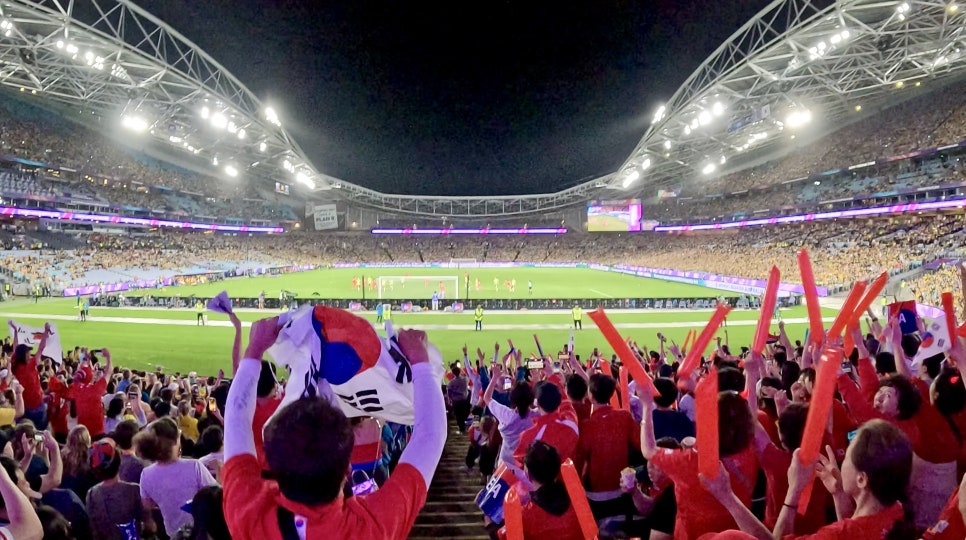
▲ 2026 AFC Women's Asian Cup, Korea vs. Australia — Korean supporters in Australia united in a sea of red
Part 1. The Korean Community in Australia Cheers for Team Korea
"Dae~han Minguk!"—Loud and Clear Among 60,000 Spectators
The Korea–Australia match, held on March 8 at Stadium Australia in Sydney, drew a crowd of approximately 60,000 spectators. Although the Korean supporters numbered only around 700—far outnumbered by fans of Australia's women's national team, the Matildas, dressed in yellow—they transformed one section of the stadium into a vibrant celebration of Korean culture through the rhythms of samulnori, coordinated chants, and a sea of Korean national flags.
"Although we were small in number, we wanted our voices to inspire the px-x-layers, so we began preparing more than a month in advance. Through our cheering, we hope to express our pride as Koreans before the Australian public."
- Lim Jeong-ho, Chair of the Supporters' Organizing Committee and former President of the Australian Football Federation
At the quarterfinal against Uzbekistan on March 14, an even larger number of Korean supporters packed the stadium, creating an atmosphere reminiscent of a home match in Korea and capturing the attention of local media and football fans alike. Korea went on to record a commanding 6–0 victory.
"The energy is incredible. Even though Korea is the visiting team, it's amazing to see so many fans cheering for them. It's truly impressive." – Cooper, Australian spectator and social media influencer
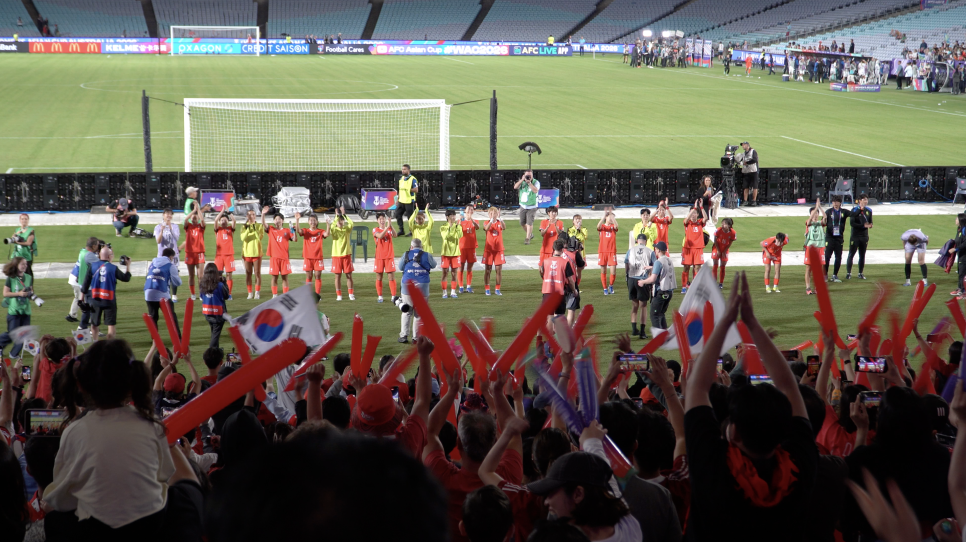
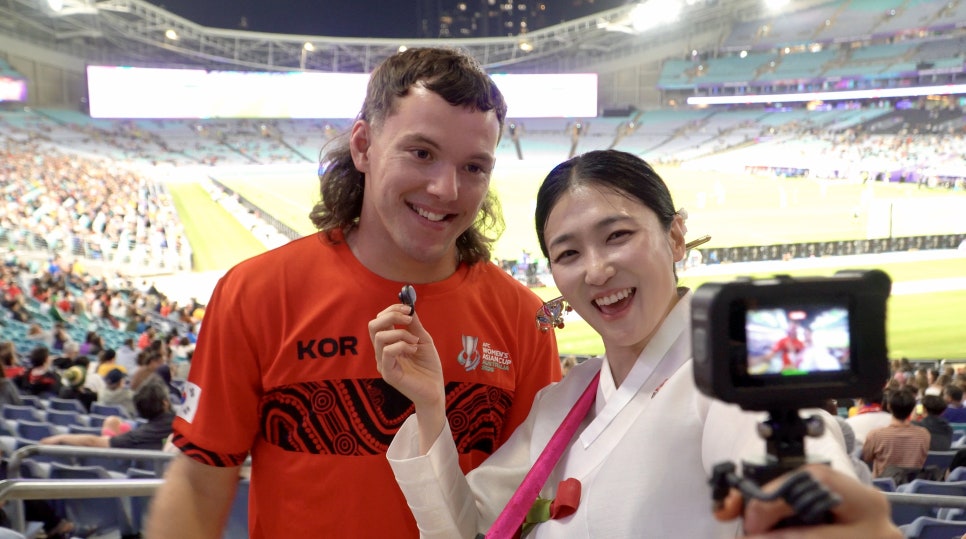

▲ (From left) Members of the Korean women's national team greeting their supporters; Cooper, an Australian spectator, being interviewed by Youth Correspondent Kim Deborah; Lim Jeong-ho, Chair of the Supporters' Organizing Committee
Cheering Beyond Borders, United by "Arirang"
As a musician who studies Arirang, I was once again reminded of the song's extraordinary power during these cheering events. Working holiday participants, international students, members of the Korean diaspora, and second- and third-generation Korean Australians—from different generations and backgrounds—all raised the lights of their smartphones and sang Arirang together. In that moment, the entire stadium was united as one. After advancing to the semifinals, the Korean px-x-layers expressed their gratitude to the supporters.
"We could hear your cheers—and Arirang—so clearly. Thank you so much!" – Ji So-yun
"Your support gave us tremendous strength, and that's why we were able to win 6–0. Please come cheer for us again!" – Son Hwa-yeon
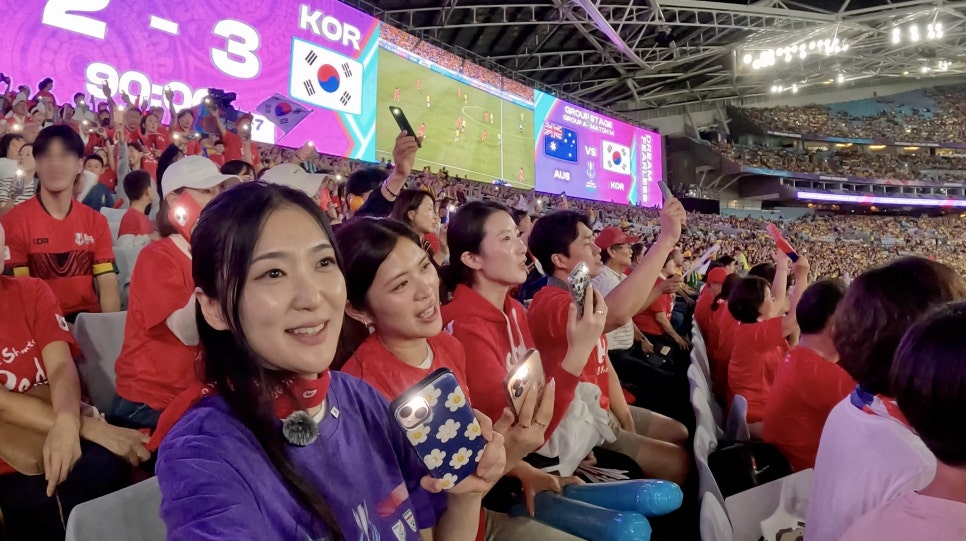
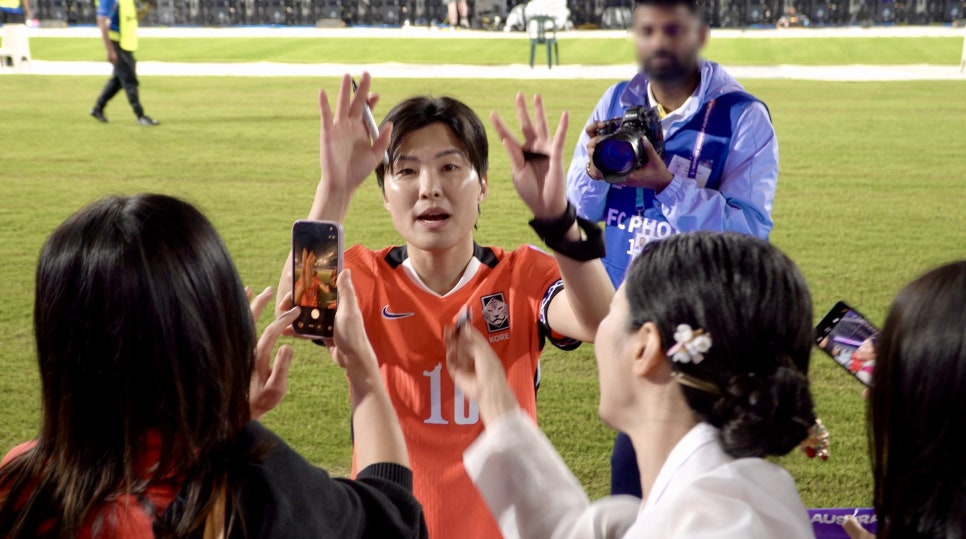
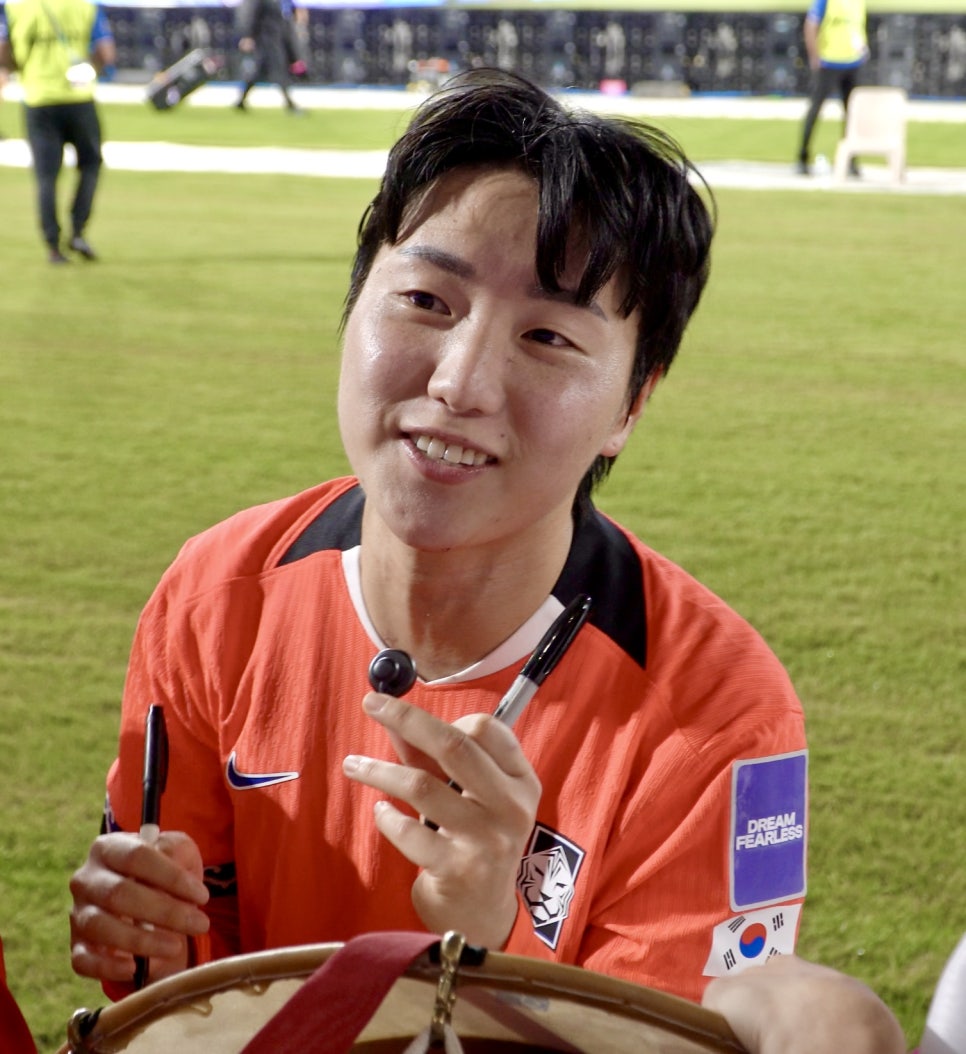
▲ (From left) Young Council Members of the Australia Municipal Chapter taking part in the Arirang flash event; Ji So-yun and Son Hwa-yeon expressing their appreciation to the supporters
Part 2. The Korean Community in Australia Cheers for North Korea
Cheering for North Korea—and a Greeting in Return
On March 9, the North Korea–China match was held at Western Sydney Stadium.
Despite the rain, one group immediately caught the eye: supporters holding sky-blue inflatable cheering sticks. They were members of a cheering squad formed by various Korean community organizations across Australia, joined by Council Members of the Australia Municipal Chapter of the Peaceful Unification Advisory Council (PUAC).
As the match got underway, the supporters enthusiastically chanted, "Korea, let's win!"
"We formed this cheering squad in the spirit of supporting both South and North Korea as one Korean people. I hope the voices of the Korean community in Australia cheering for the North Korean team will echo across the skies of the North, so that South and North Korea may become one in heart and purpose." – Han Jeong-tae, Head of the Supporters' Group, Council Member of the Australia Municipal Chapter of the Peaceful Unification Advisory Council (PUAC), and City Councillor of Ryde
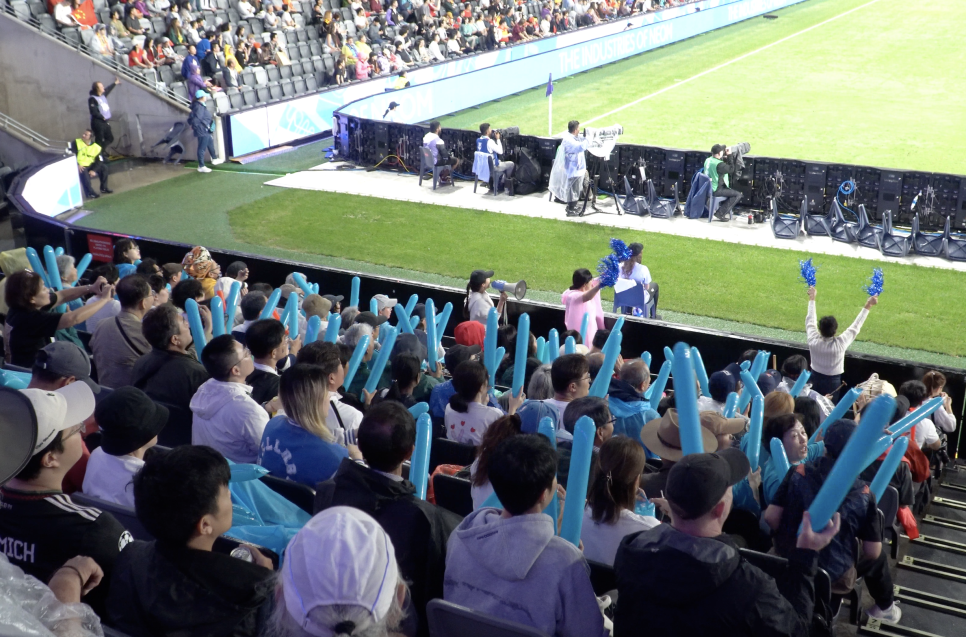
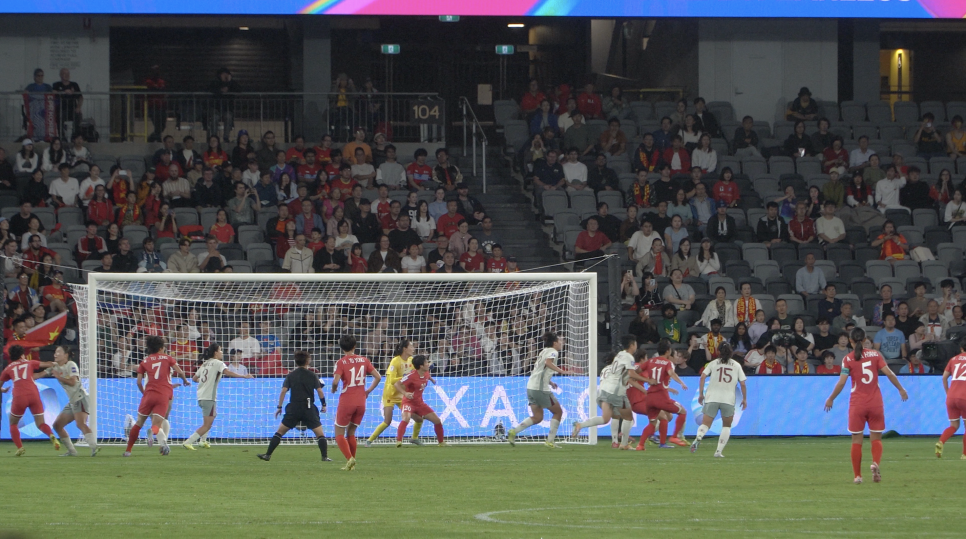
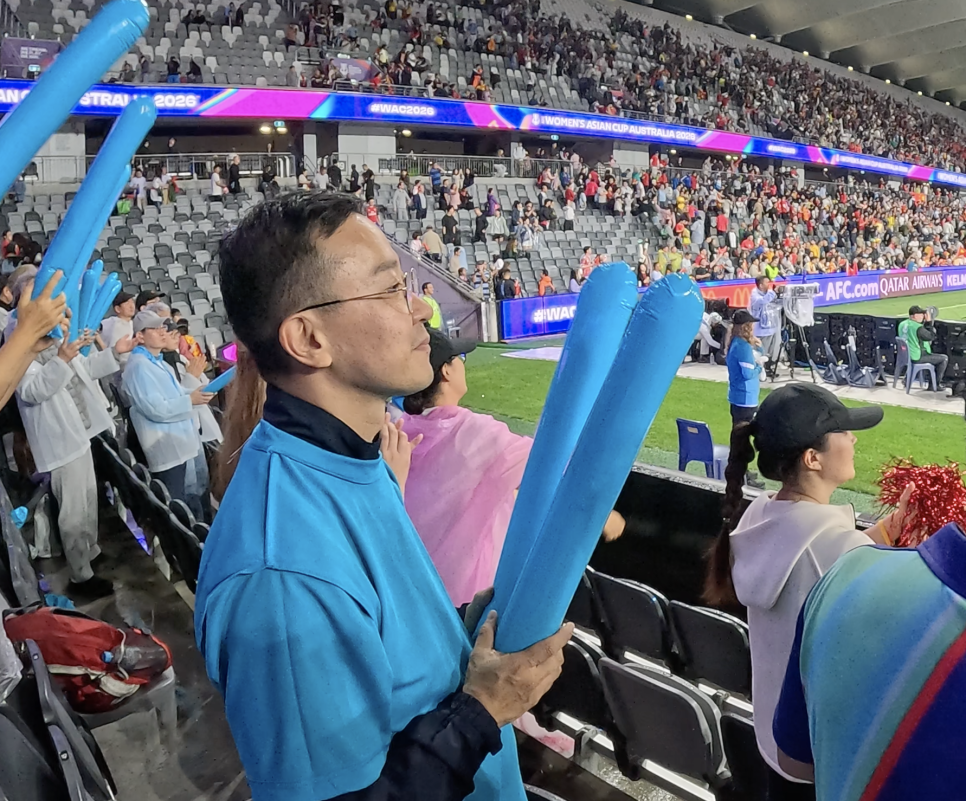
▲ (From left) The Australian Korean cheering squad; the North Korea–China match; Council Member Han Jeong-tae watching the match
A Greeting Over the Shoulder—A Few Unforgettable Seconds
After the match, a truly moving moment unfolded.
Even after greeting the officials' stand, the North Korean px-x-layers continued toward their bench as the Australian Korean supporters kept cheering to the very end, beating their blue cheering sticks in encouragement. Then came an unexpected moment. The North Korean px-x-layers paused, turned around, and raised their hands in applause and greeting toward the Australian Korean supporters. At that instant, the loudest cheer of the day erupted from the stands. It was a moment that transcended sport—a moment born of genuine sincerity. International spectators who witnessed the exchange were equally moved.
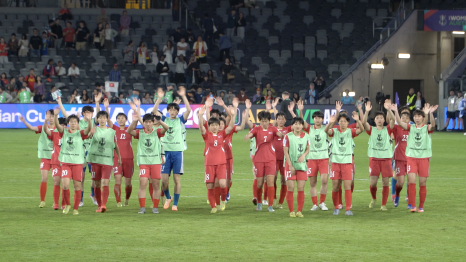
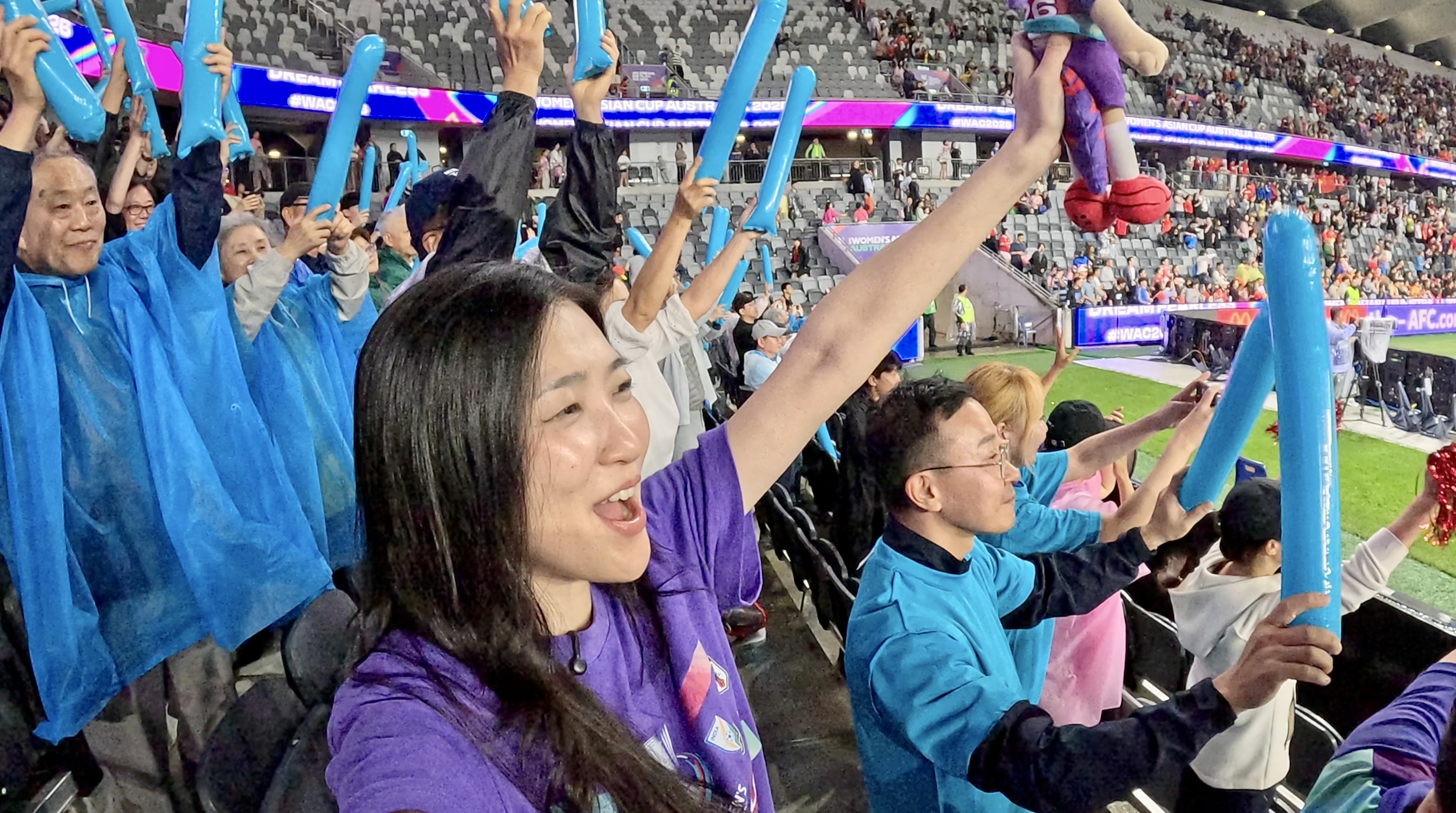
▲ The North Korean women's national team and the Australian Korean cheering squad exchanging greetings
"I hope peace can be built gradually—not simply as the absence of war, but through exchanges in sports, culture, and many other fields." – Hong Young-ja, Doctoral Student in Culture, Society, and Media, University of North Korean Studies
"Peace is unity. Peace is about solidarity. Beyond nationality, race, and gender, we are all human beings, so I don't believe there is any reason to hate one another or for countries to go to war." – Jim, International spectator
"It was truly impressive to see Korean fans cheering for the North Korean team. Watching them beat the drums, cheer at the top of their voices, and exchange greetings with the px-x-layers felt incredibly heartwarming." – Sharon, Australian spectator
That day, support in the stadium was conveyed not merely through sound, but from the heart.

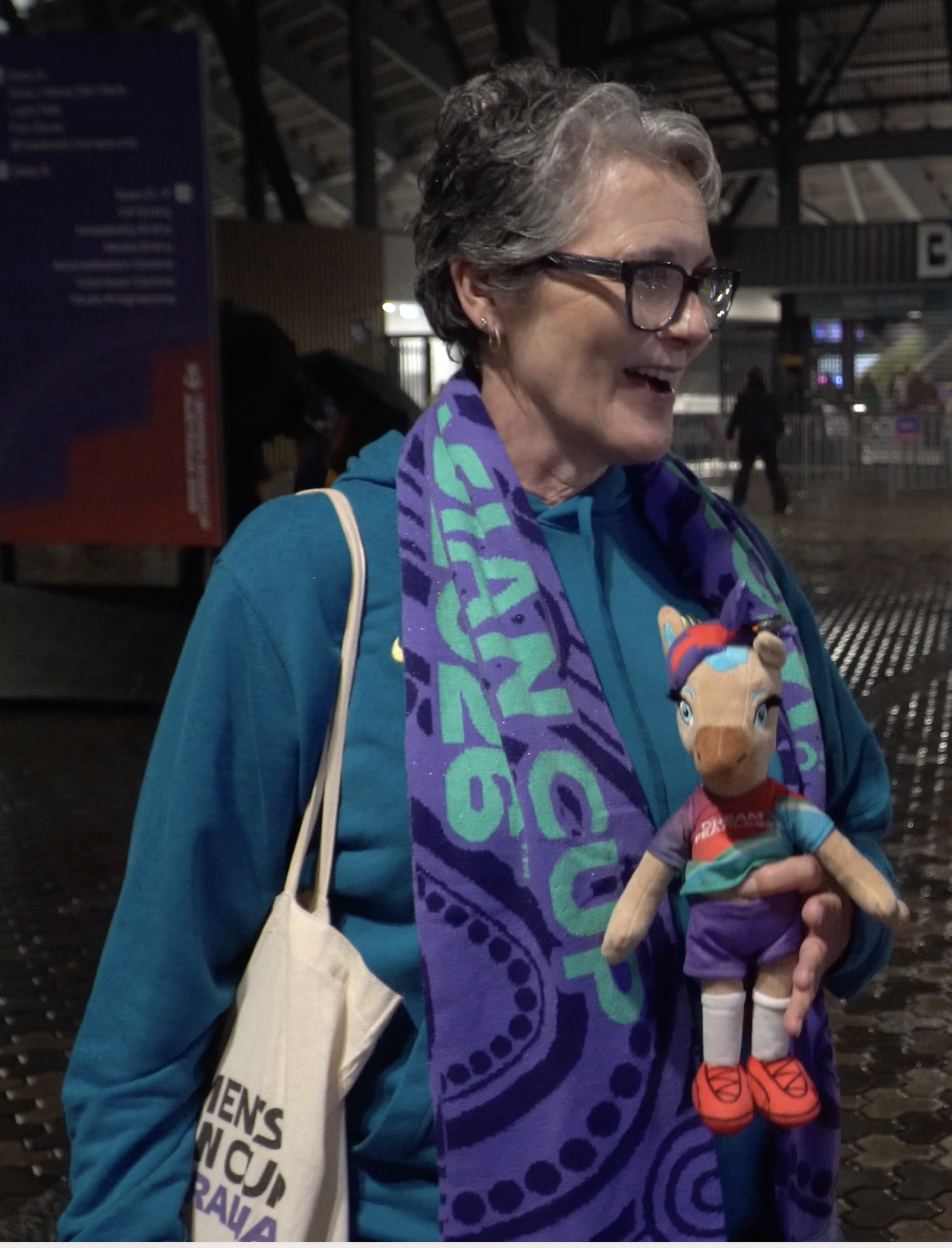
▲ (From left) Hong Young-ja being interviewed; Jim, an international spectator; Sharon, an Australian spectator
Part 3. Cheering That Began in the Streets Became a Cultural Experience
K-Cheering Culture That Captivated Local Spectators
Before every match, a samulnori parade led by the Korean national flag became one of the tournament's most distinctive sights. Korea was the only participating country whose supporters staged a cheering parade in traditional attire, turning the area around the stadium into a vibrant showcase of Korean culture.
"Sydney's Korean community has several pungmul performance groups. In the past, each group performed separately, but for this Korea–Australia match, they all came together as one team. That made this performance especially meaningful." – Ji Yong-kwon, Executive Committee Member, Sydney Korean Association
Local spectators smiled, clapped along to the rhythms, and eagerly asked to take photographs. By blending Korean tradition with passionate support for the national team, K-cheering culture naturally became a bridge for cultural exchange.
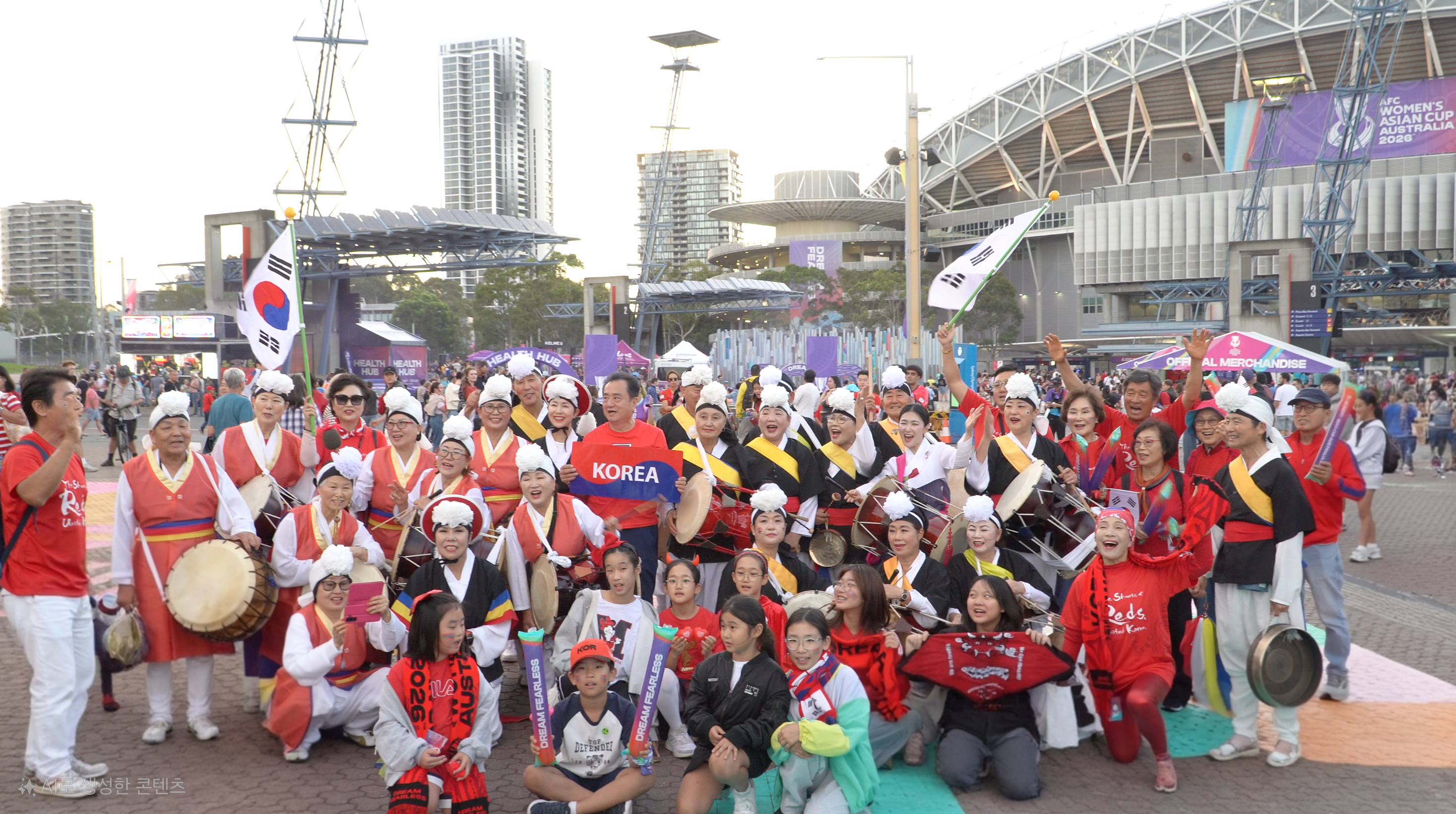
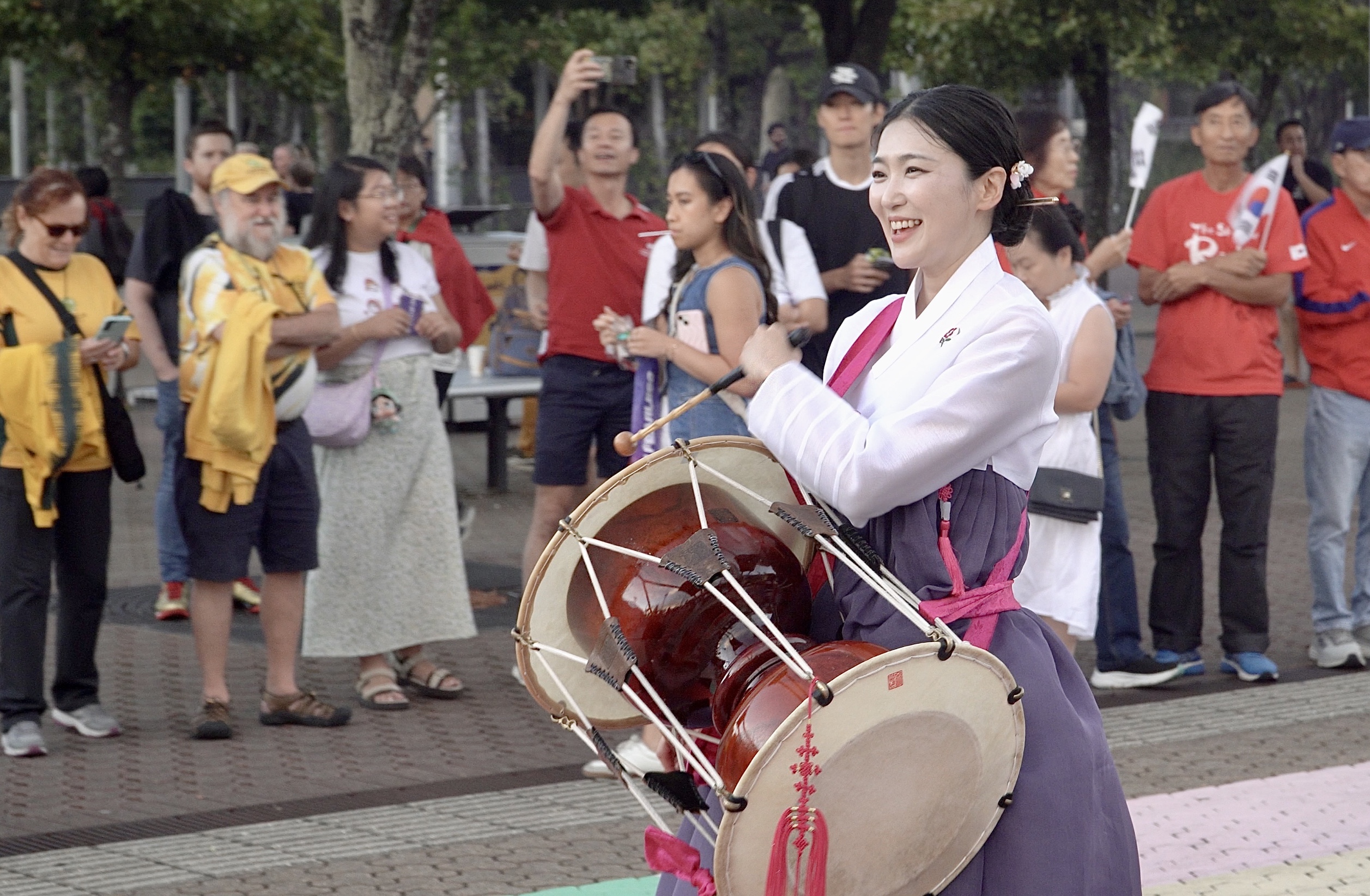
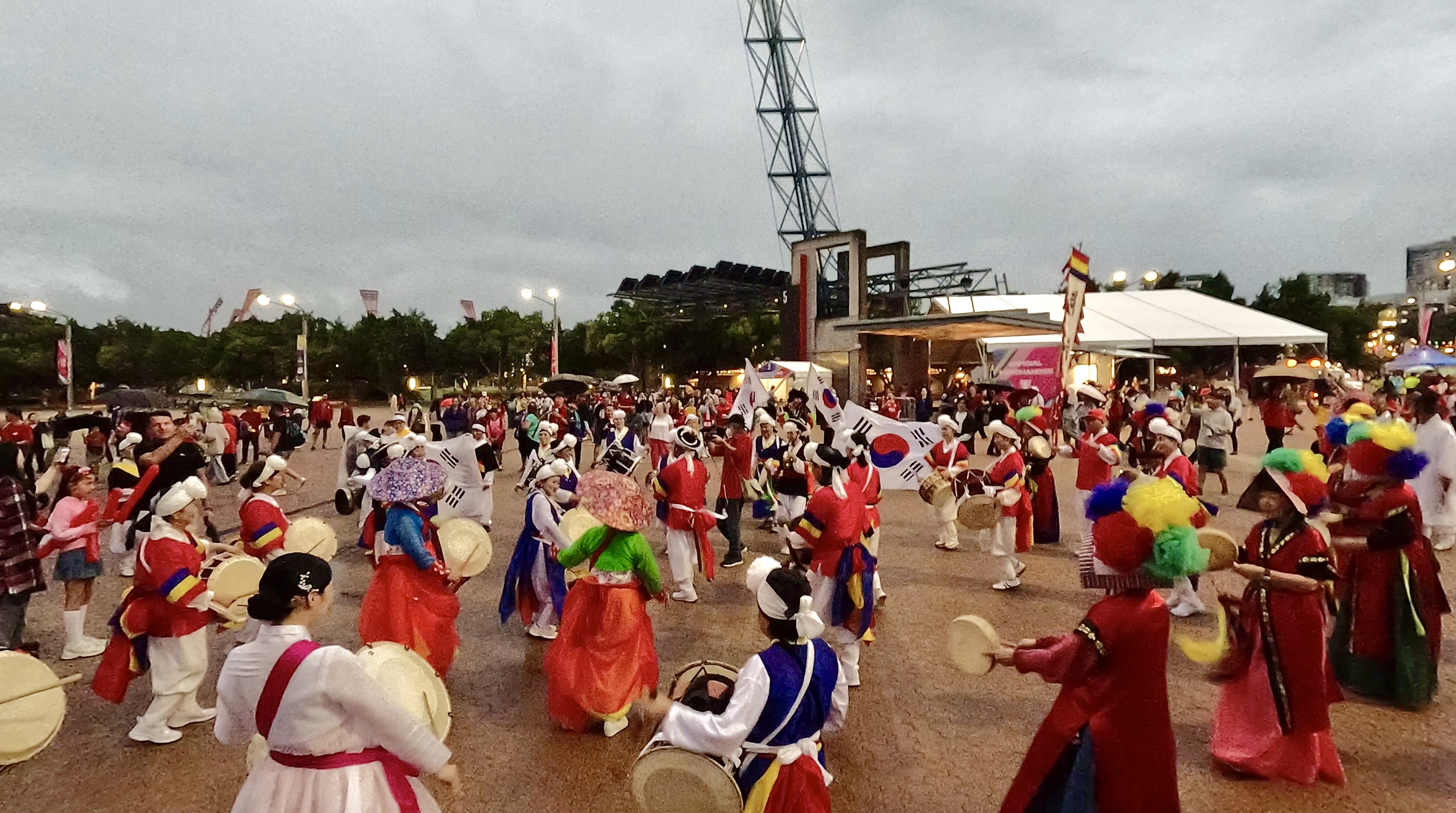
▲ (From left) The combined samulnori ensemble formed to support Team Korea; Youth Correspondent Kim Deborah, leader of Sydney Hanwoori Samulnori, leading the parade; the stadium precinct brought to life by the rhythms of samulnori
Another defining feature of the event was the civility and grace that characterized K-cheering culture.
After every match, leaders of the Korean community took the initiative in cleaning up the seating area, with young Council Members voluntarily joining the effort. Their actions were featured on the tournament organizers' official social media channels, drawing widespread attention.
Comments such as "Respect" and "Elite spectator behaviour" reflected the view that Korean cheering culture embodies not only enthusiasm but also consideration for others, orderliness, and a strong sense of community. Having witnessed K-cheering culture firsthand, AFC official Michael Hennessy enthusiastically shared his impressions:
"I loved it! Their vibrant red shirts and passionate chants really lifted the atmosphere in the stadium. Watching them erupt in celebration every time Korea scored was truly impressive." – Michael Hennessy, Promotion & Marketing Manager, AFC Women's Asian Cup
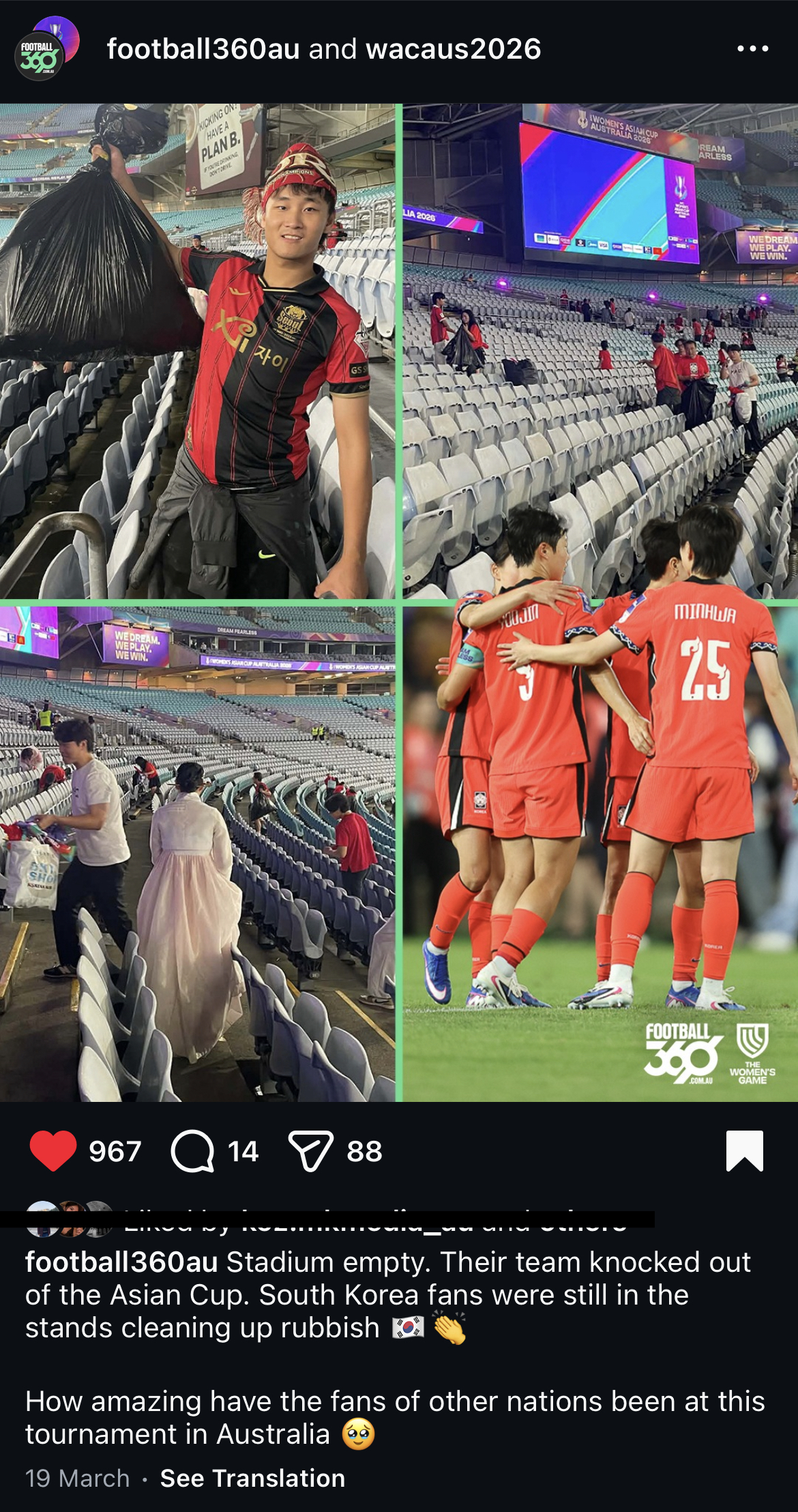
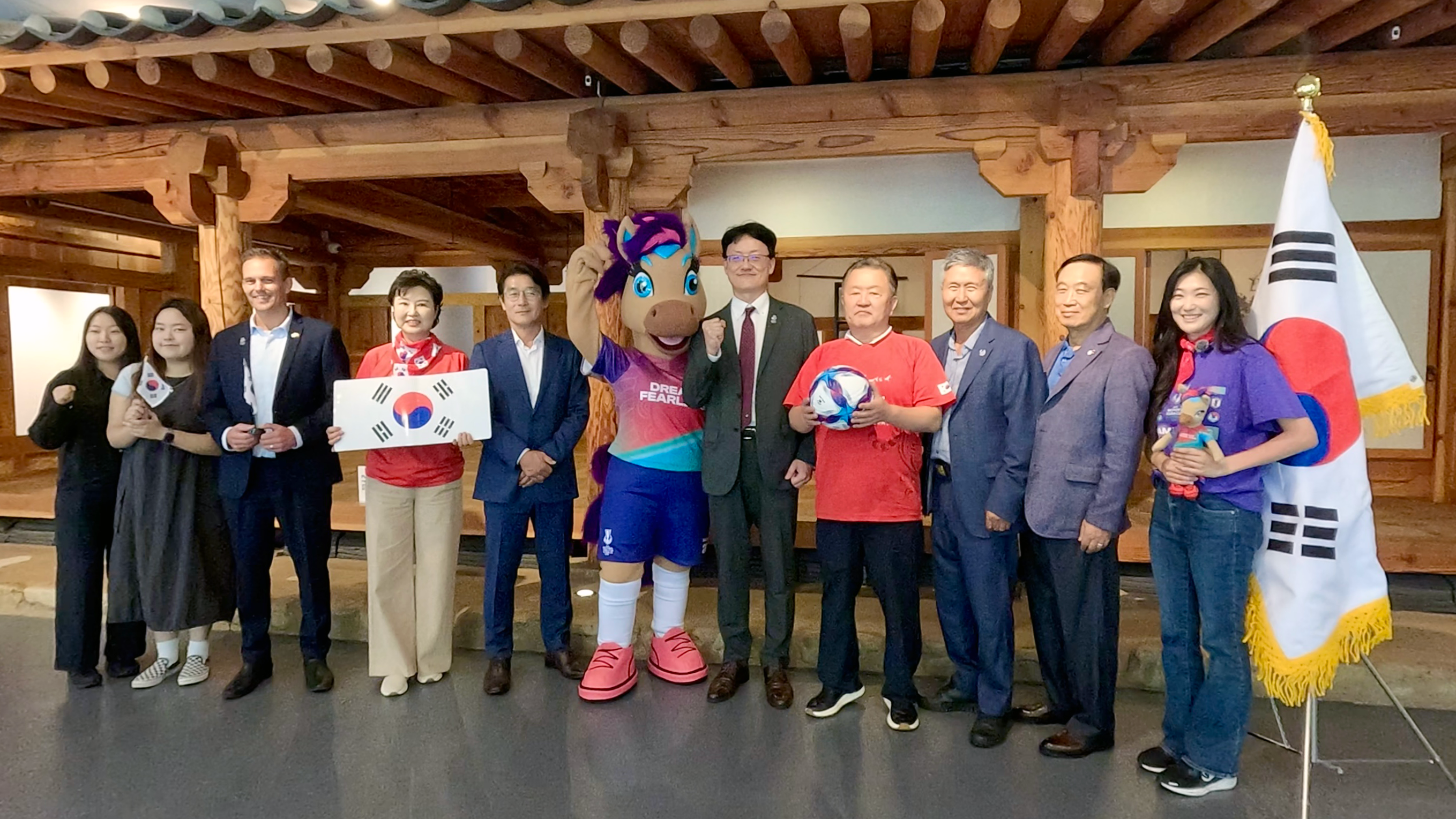
▲ (Left) An official social media post by the tournament organizers. (Right) Choi Yong-jun, Consul General of the Republic of Korea in Sydney (center), Michael Hennessy of the AFC (far left), and members of the Korean community at the Korean Cultural Center
A Message of Peace That Begins Overseas
One thing became abundantly clear through this reporting: overseas Koreans are not merely observers—they are active participants in putting peaceful coexistence into practice.
"Whether they come from the North or the South, we regard them all as our fellow Koreans. By cheering wholeheartedly for our compatriots from North Korea, we hope—even in a small way—to help ease the strained relationship between the two Koreas, and we sincerely look forward to the day when peace comes to the Korean Peninsula." – Shin Jun-sik, Executive Committee Member, Australian Korean Community Supporters' Group
Actor Lee Won-jong, a PUAC Public Relations Ambassador who attended the event, shared a similar reflection.
"When the North Korean px-x-layers turned to greet our cheering section after the match, I was so moved that I nearly cried. It made me think that efforts to break through the current stalemate might begin even sooner within overseas Korean communities than at home." – Lee Won-jong, Actor and PUAC Public Relations Ambassador
"Just having the opportunity to see North Korean athletes up close was a remarkable experience. More importantly, being able to come together and cheer with one united heart made it especially meaningful. I hope there will be many more opportunities like this so that young people will become more interested in peace and unification." – Lee Ji-in, Council Member of the Australia Municipal Chapter and Youth Correspondent
"I made a friend from North Korea while studying in China. Watching today's match reminded me of her. Suk, I hope you're doing well. I miss you. Let's be sure to meet again someday!" – Bae Eun-sol, Council Member, Australia Municipal Chapter
Perhaps the mixture of emotion and longing we felt while cheering for the North Korean team stemmed from the belief that blood is thicker than water. The candid reflections shared by the young Council Members during the tournament showed that, more than lofty slogans, personal experiences and human connections can make peace feel closer and more real.
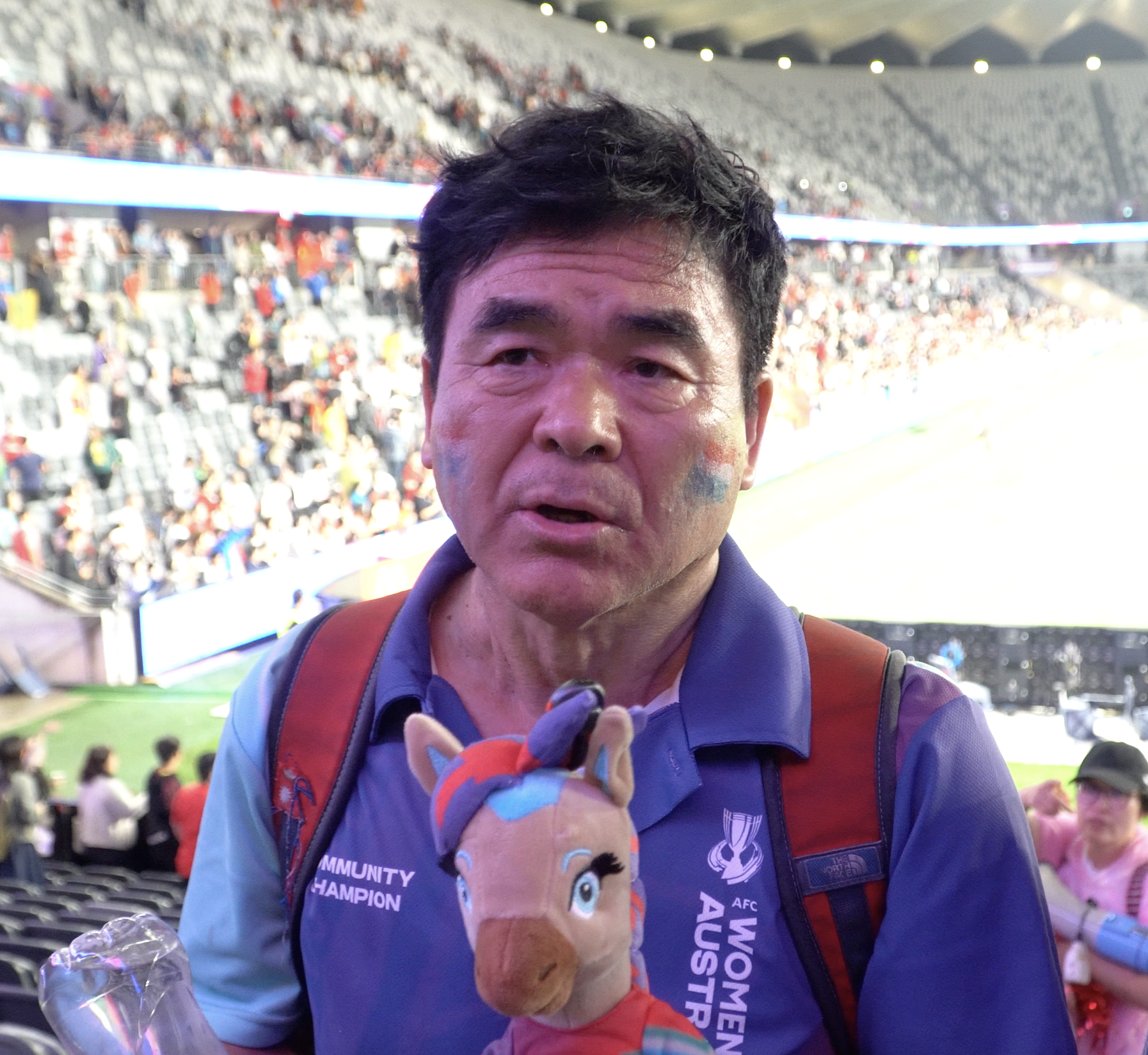
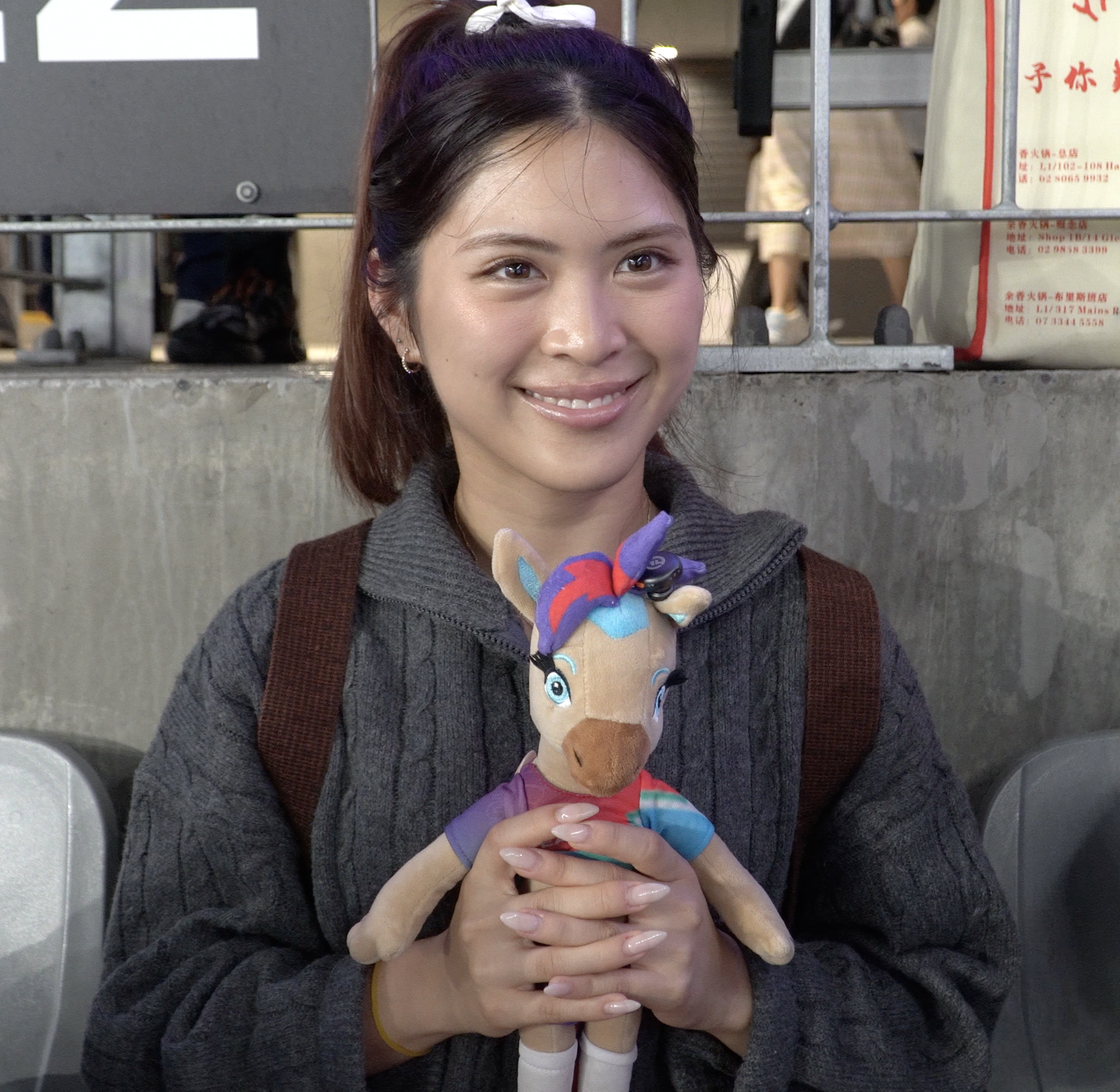

▲ (From left) Executive Committee Member Shin Jun-sik; Council Member Lee Ji-in (Youth Correspondent); Council Member Bae Eun-sol
Epilogue
From 460 Meters to Two Meters
Last February, an episode of the Peaceful Unification Advisory Council (PUAC) YouTube series Tong Correspondent 24 Hours looked across to North Korea from the Odusan Unification Observatory. Although North Korea lay only 460 meters away—close enough to seem almost within reach—the reality of division still felt far away.
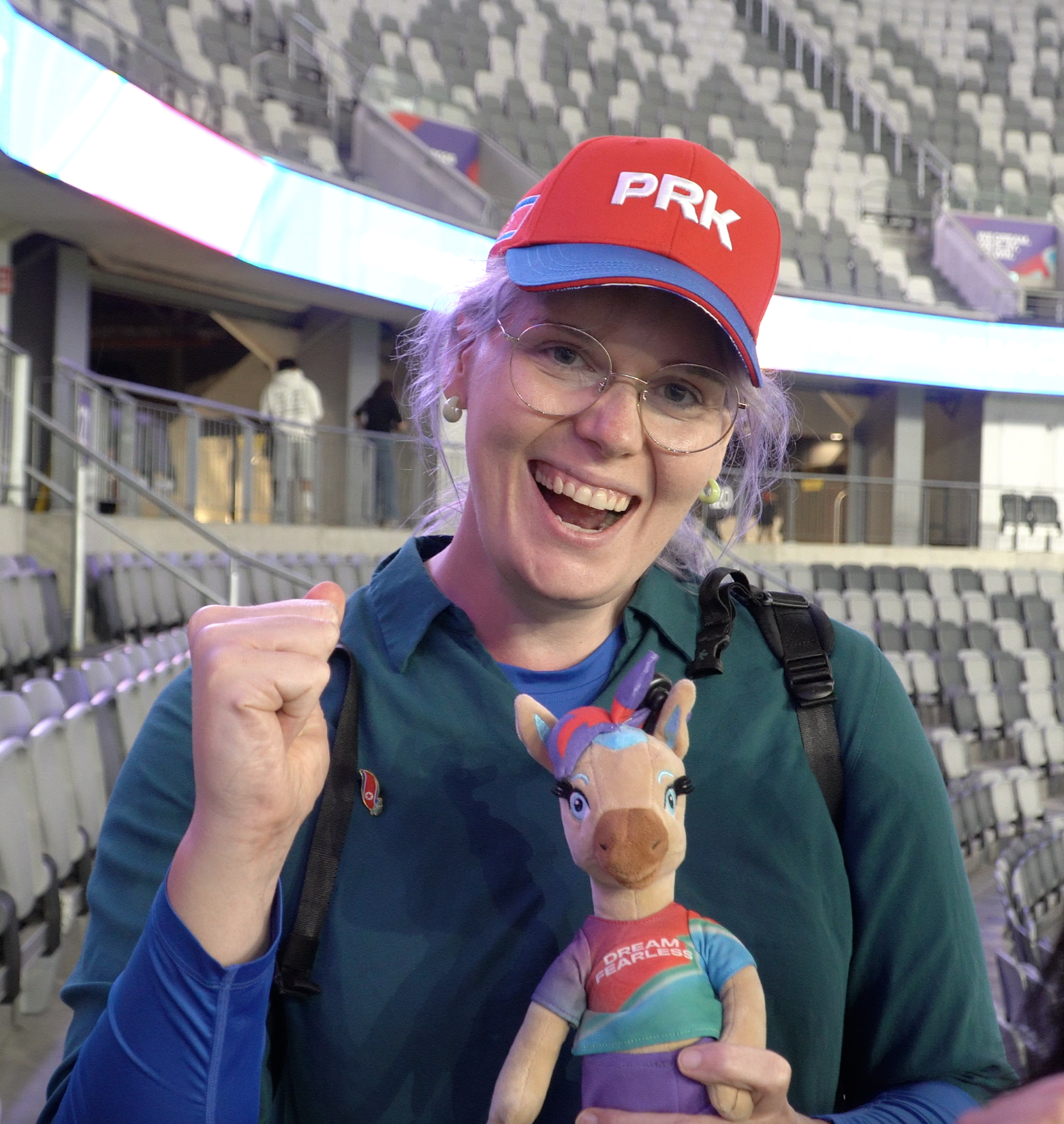
In Sydney, however, that distance suddenly shrank to just two meters, as North Korean px-x-layers warmed up right before our eyes. In that moment, our cheers did more than narrow the distance—they transformed what that distance itself meant. Perhaps the distance we have long felt between North and South has never truly been one of geography, but of the heart.
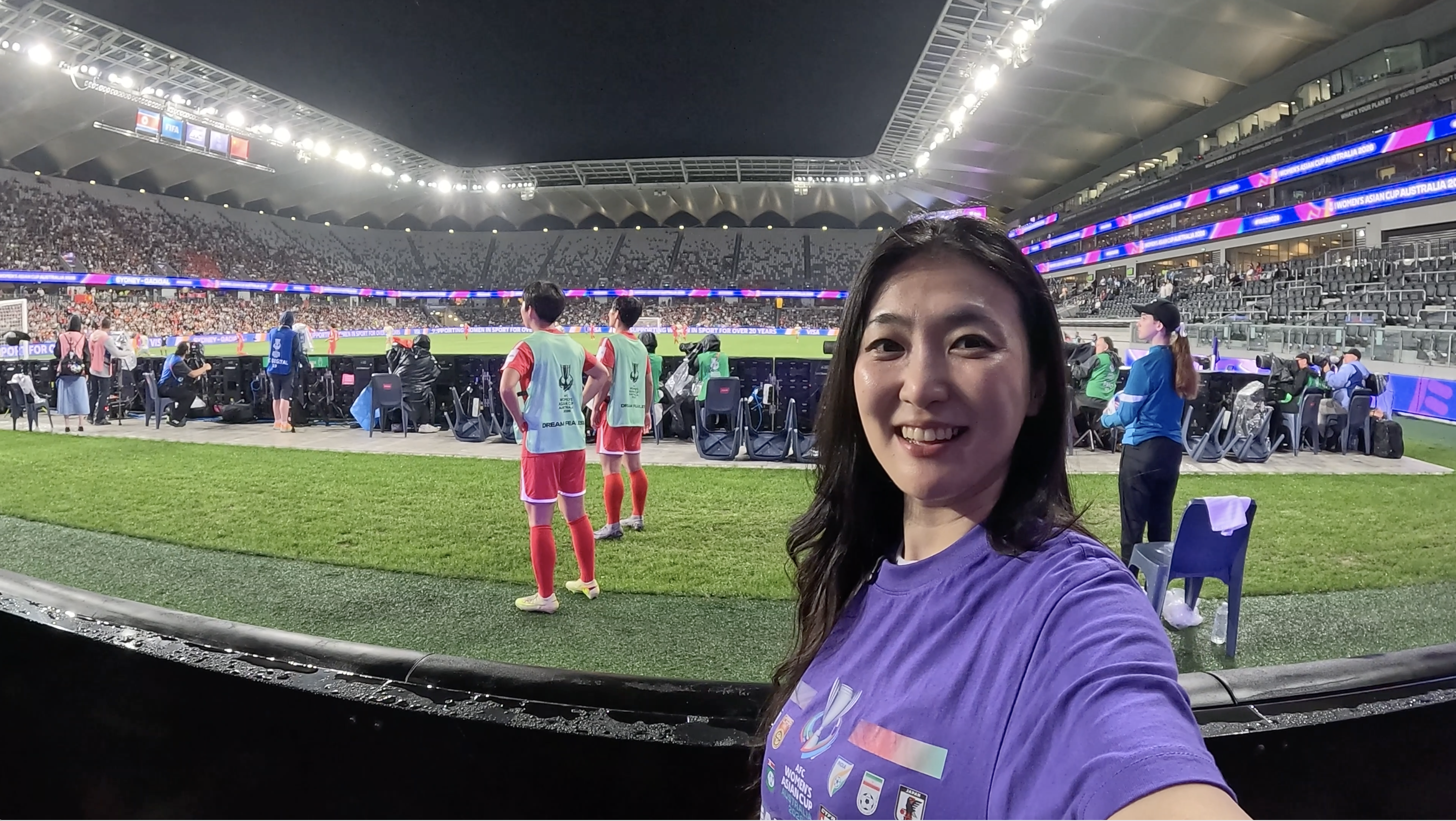
▲ Youth Correspondent Kim Deborah standing just two meters away from North Korean px-x-layers as they warmed up before the match
-
How satisfied are you with the information you have reviewed?