



[Domestic] Discussion of Policy Priorities for Advancing the Korean Peninsula Peaceful Coexistence Policy: 2026 First and Second Functional Policy Meetings
- Hanam City Chapter
- 03-31-2026 ~ 04-02-2026
Discussion of Policy Priorities for Advancing the Korean Peninsula Peaceful Coexistence Policy:
2026 First and Second Functional Policy Meetings
From March 31 to April 2, the Peaceful Unification Advisory Council (PUAC) held the 2026 First and Second Functional Policy Meetings at the Intercity Hotel in Daejeon. Approximately 200 Council Members participated, including about 100 representing the functional areas of Culture & Sports, Health & Welfare, and Education, and another 100 representing Politics, Public Administration, Law, Foreign Affairs, and National Security. Together, they discussed sector-specific priorities for advancing a Korean Peninsula Peaceful Coexistence Policy that resonates with the public.
First Functional Policy Meeting: Exploring the Direction of Peaceful Coexistence
The First Functional Policy Meeting opened with a special lecture by Secretary General Bang Yong-seung titled "A New Era of Peaceful Coexistence and Shared Prosperity, and the Role of the Peaceful Unification Advisory Council." Stressing that "peace begins when we recognize and respect our differences," he outlined the government's three key x-x-x-x-objectives for advancing the Korean Peninsula Peaceful Coexistence Policy: ▲ institutionalizing peaceful coexistence between the two Koreas; ▲ establishing the foundation for shared prosperity on the Korean Peninsula; and ▲ realizing a Korean Peninsula free from war and nuclear weapons. He also emphasized that peaceful unification can ultimately be achieved only by the people themselves, encouraging Council Members to listen closely to the voices of the people through initiatives such as the "Peaceful Unification Social Dialogue" and the "One Million Interviews on Peaceful Unification." The session continued with a keynote lecture by Jeong Chang-hyun, President of the Institute for Peace Economy, titled "Socio-Cultural and Educational Challenges for Peaceful Coexistence on the Korean Peninsula."
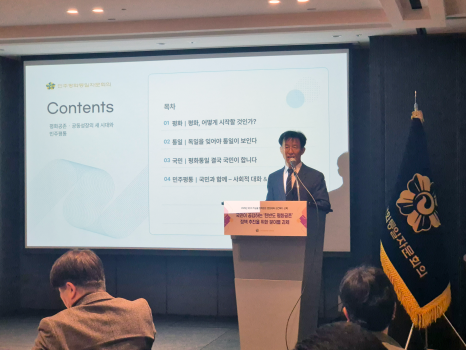
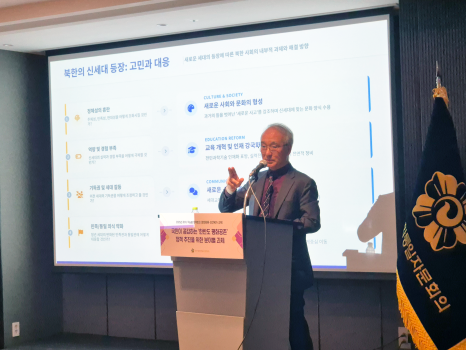
▲ Special lecture by Secretary General Bang Yong-seung (left); keynote lecture by Jeong Chang-hyun, President of the Institute for Peace Economy (right)
The meeting then moved to a policy discussion on the priority tasks for advancing the Korean Peninsula Peaceful Coexistence Policy. Discussion topics included strategies for addressing young people's declining interest in unification; ways to foster a greater sense of common identity between the two Koreas in the areas of health and welfare, culture and sports, and education as the policy is implemented; the most urgent improvements needed in school- and community-based unification education; and measures to promote inter-Korean exchanges in these fields through international cooperation.
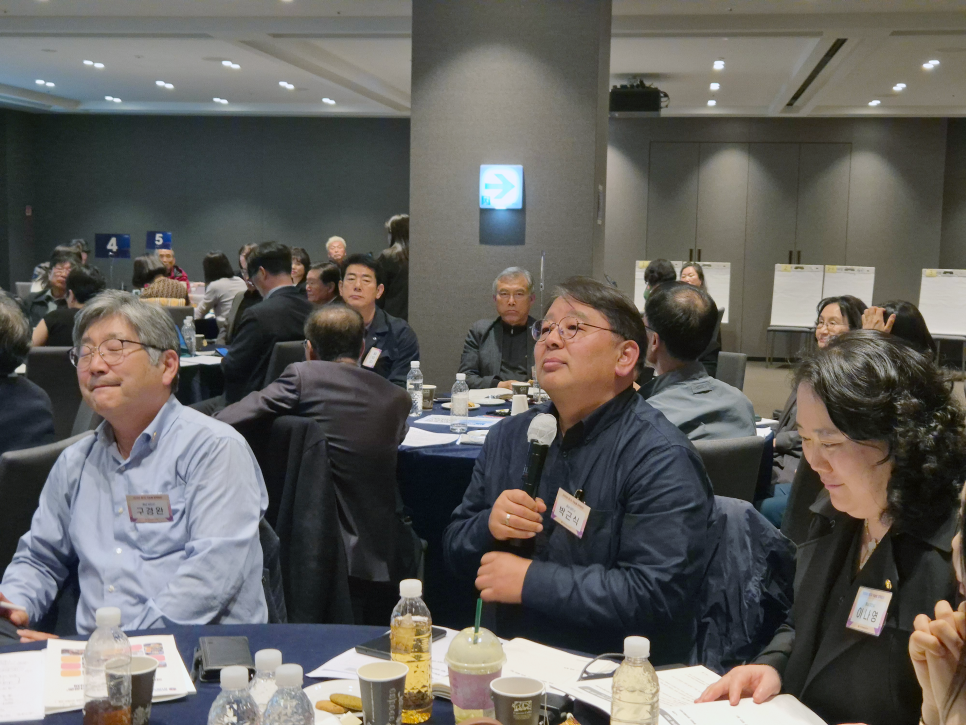
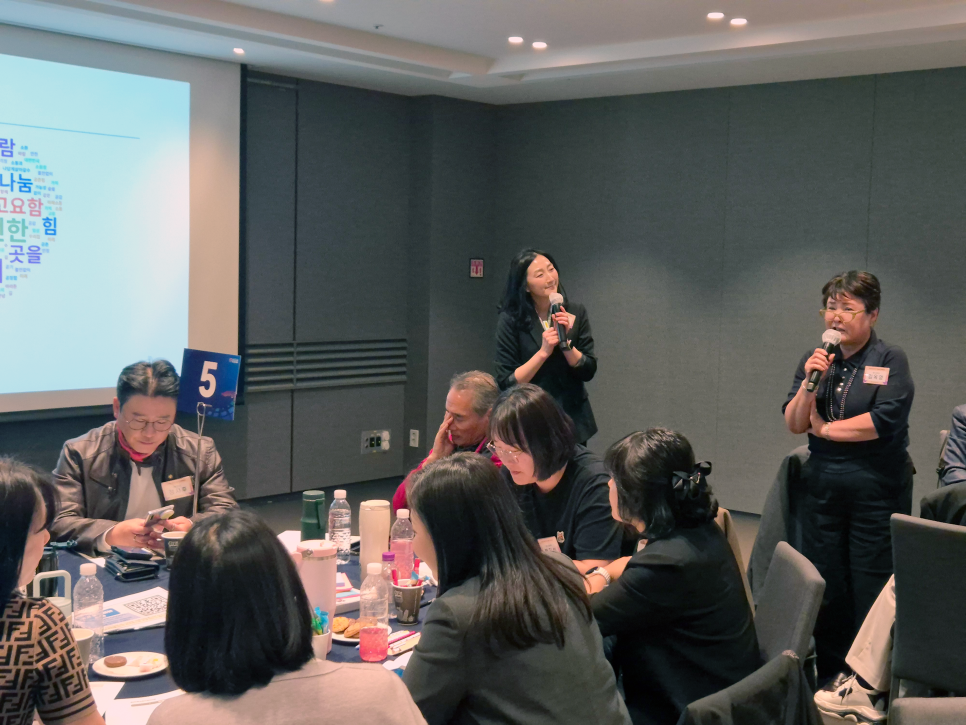
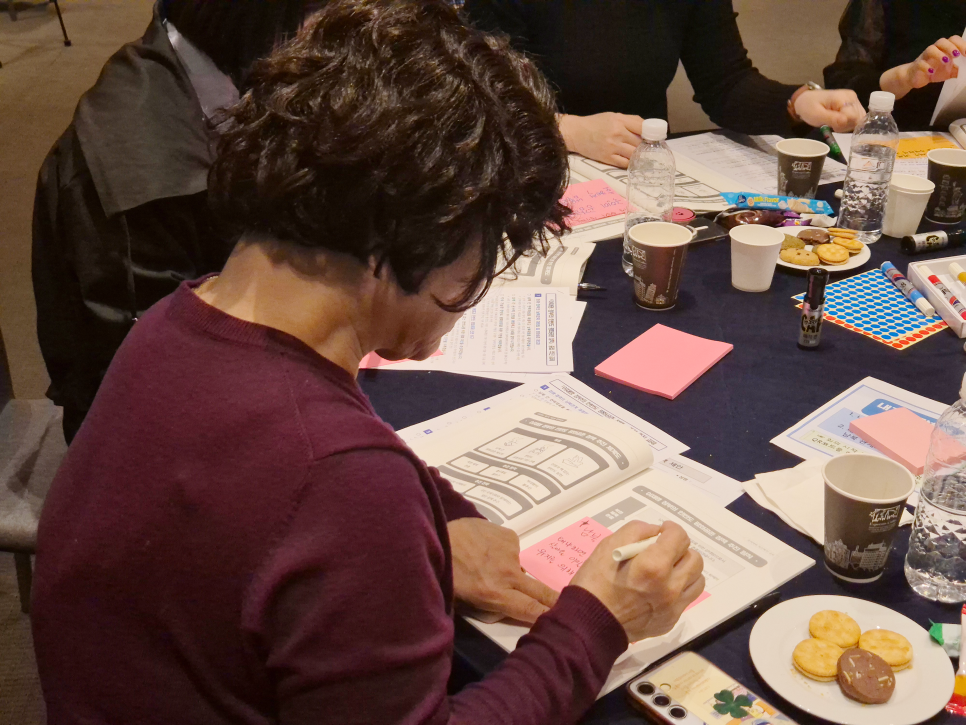
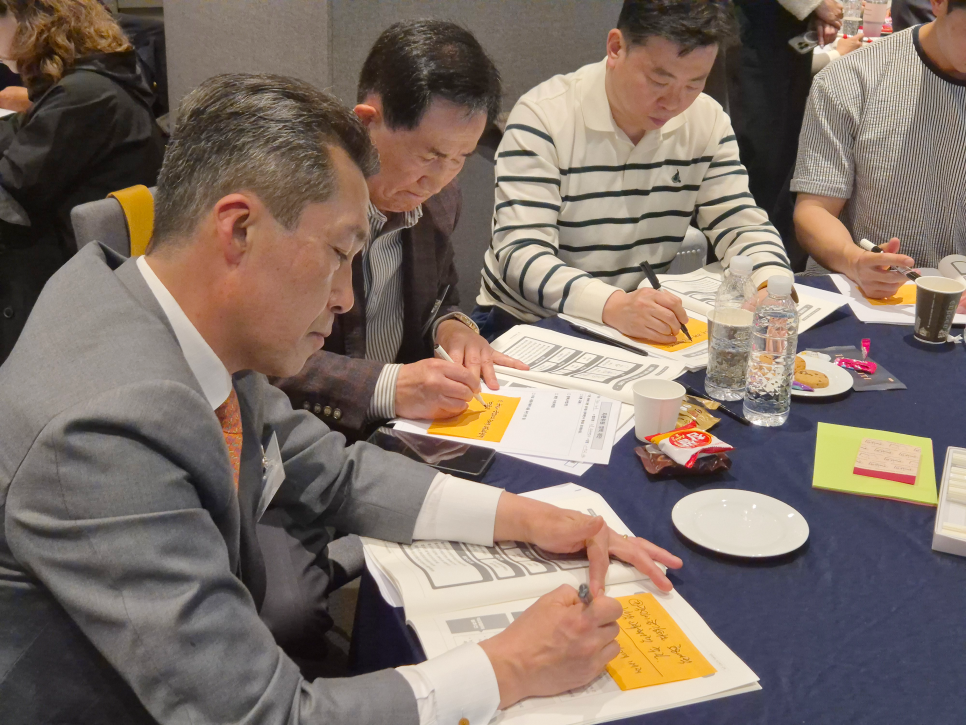
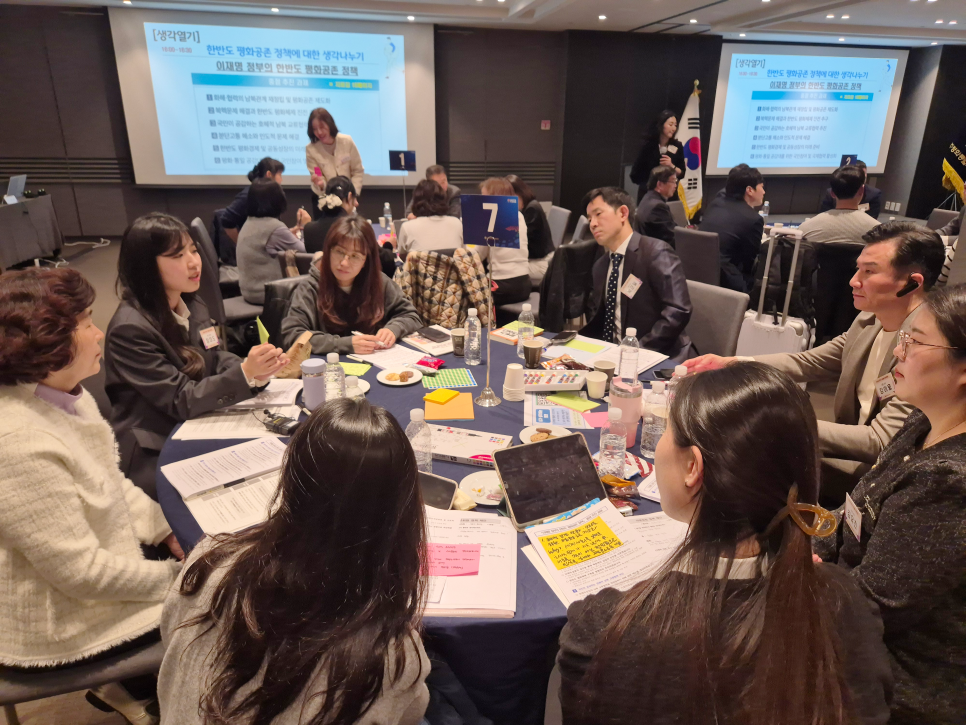
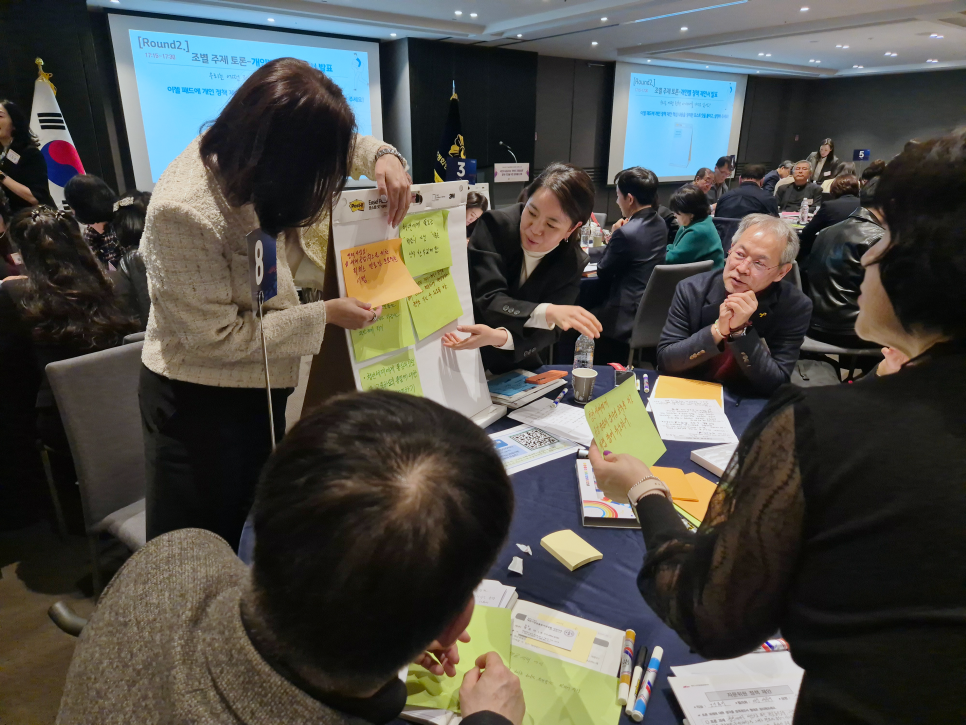
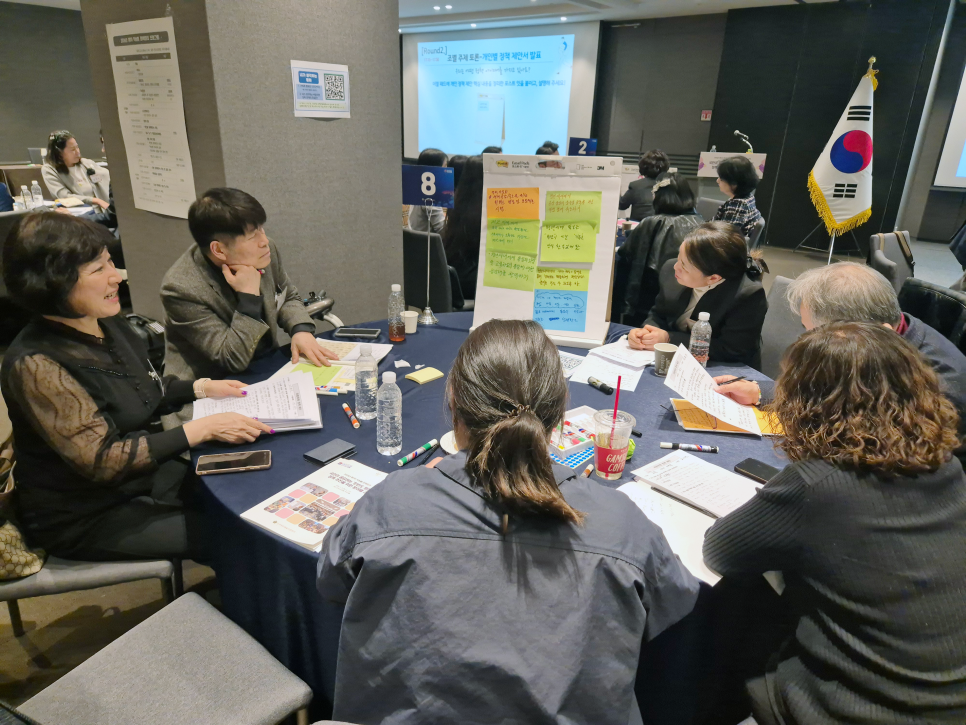
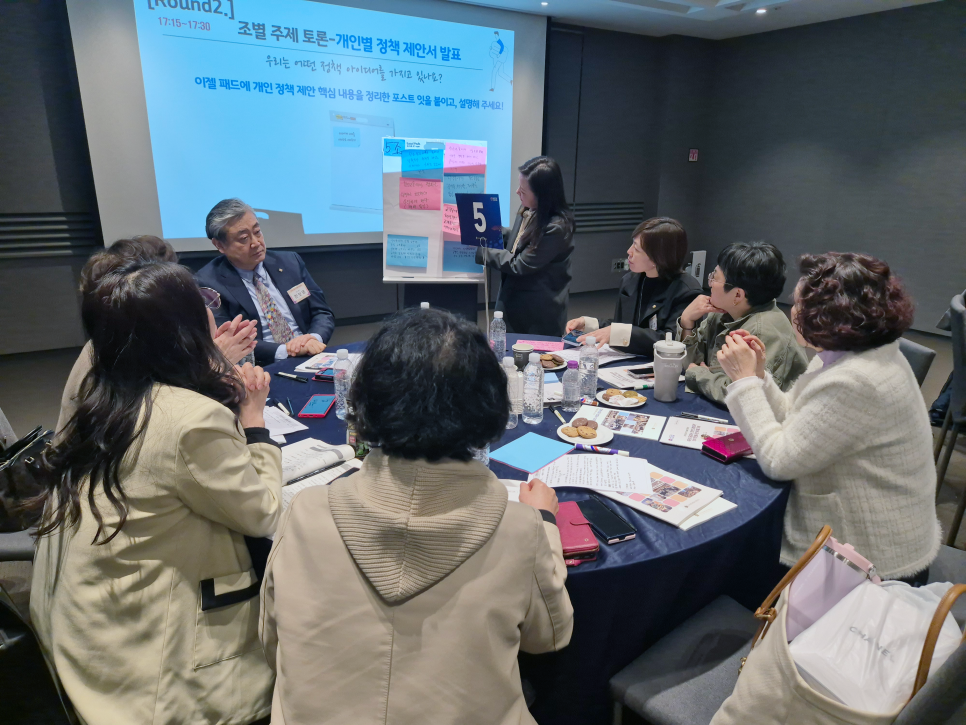
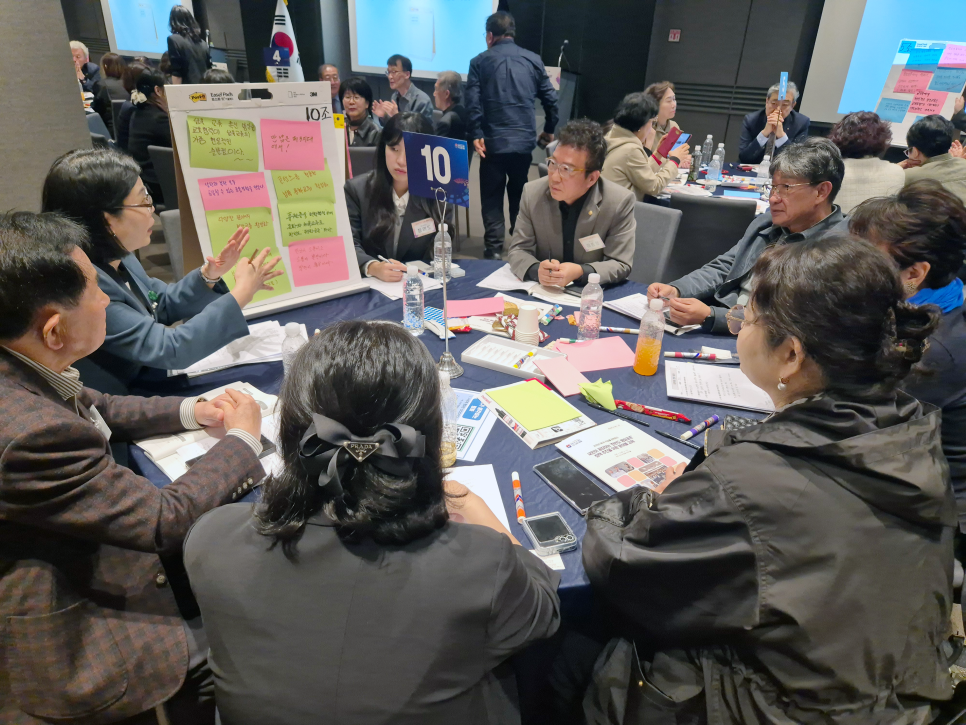
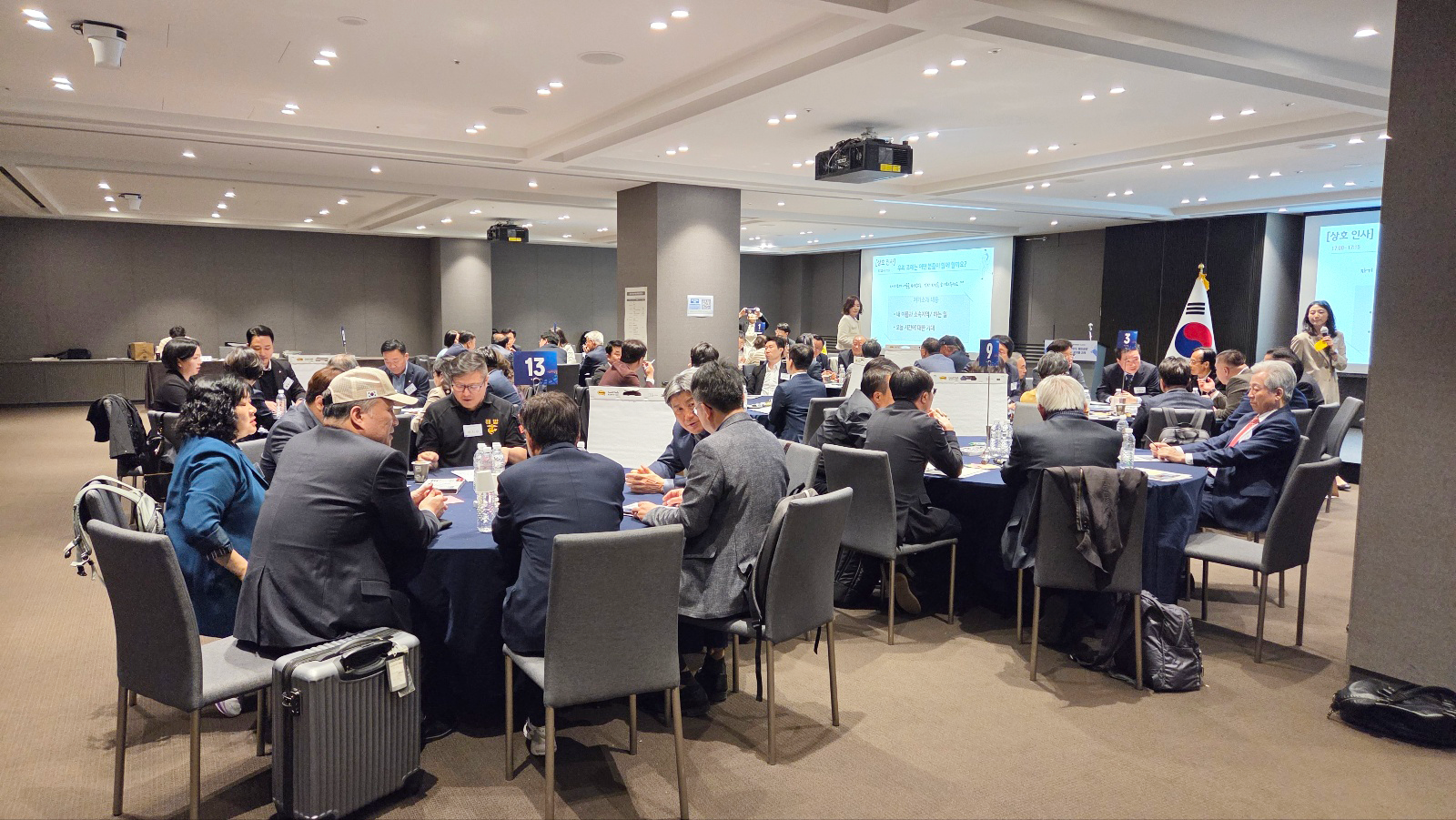
▲ Council Members participating in the First Functional Policy Meeting
Following the policy discussion, the Council Members selected discussion topics, prepared individual policy proposals, and then formed groups according to their chosen topics for more in-depth discussions. Following a vote, "Toward a More Effective Role for PUAC Council Members" (Group 1) was selected as the Outstanding Policy Proposal of the First Functional Policy Meeting. The proposal presented institutional measures to enhance the effectiveness of Council Members' activities, including ▲ expanding opportunities for self-nomination and open competition, ▲ increasing transparency in recommendation-based appointments, and ▲ establishing clearer criteria for reappointment through regular evaluations of Council Members' performance.
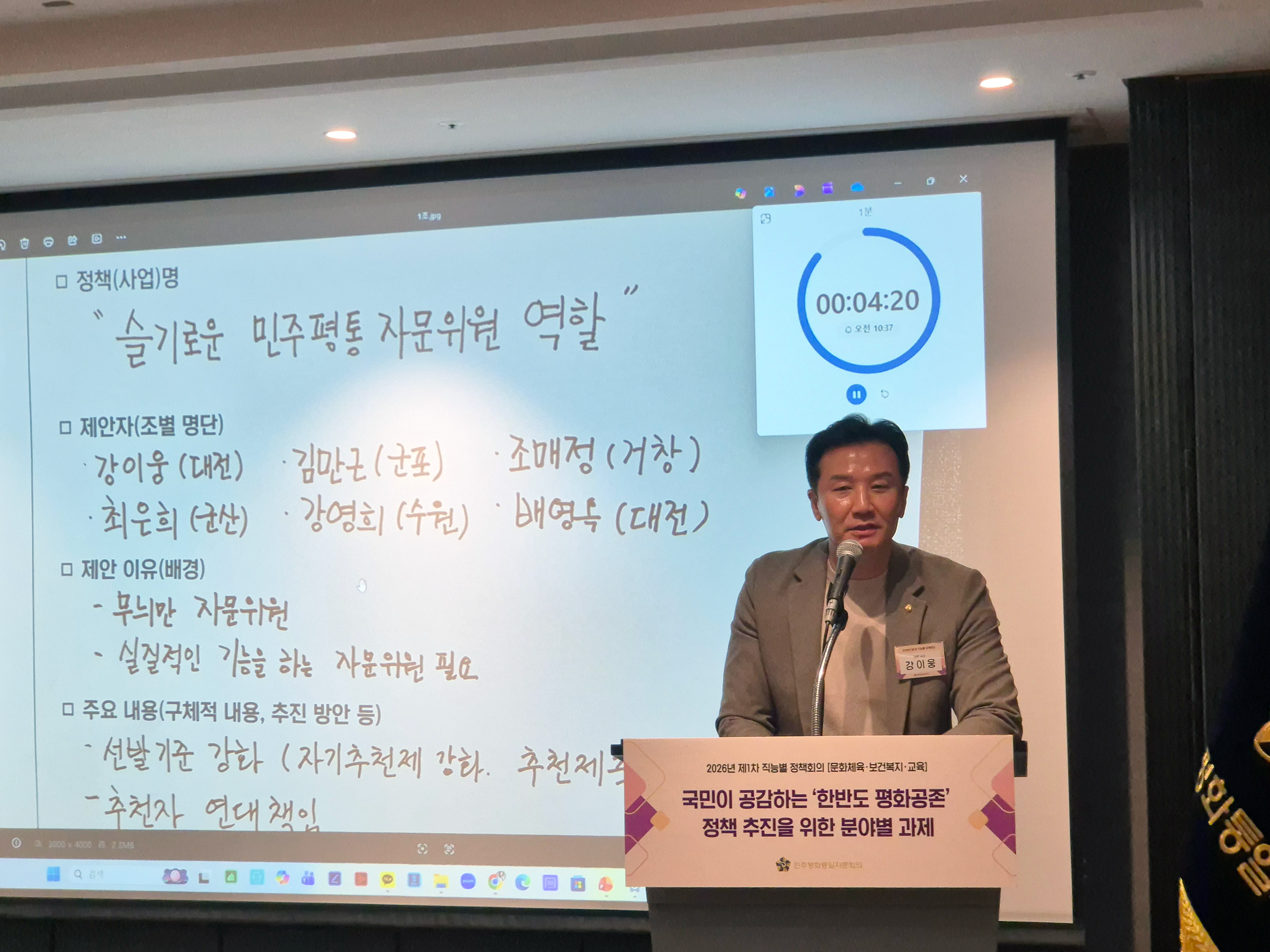
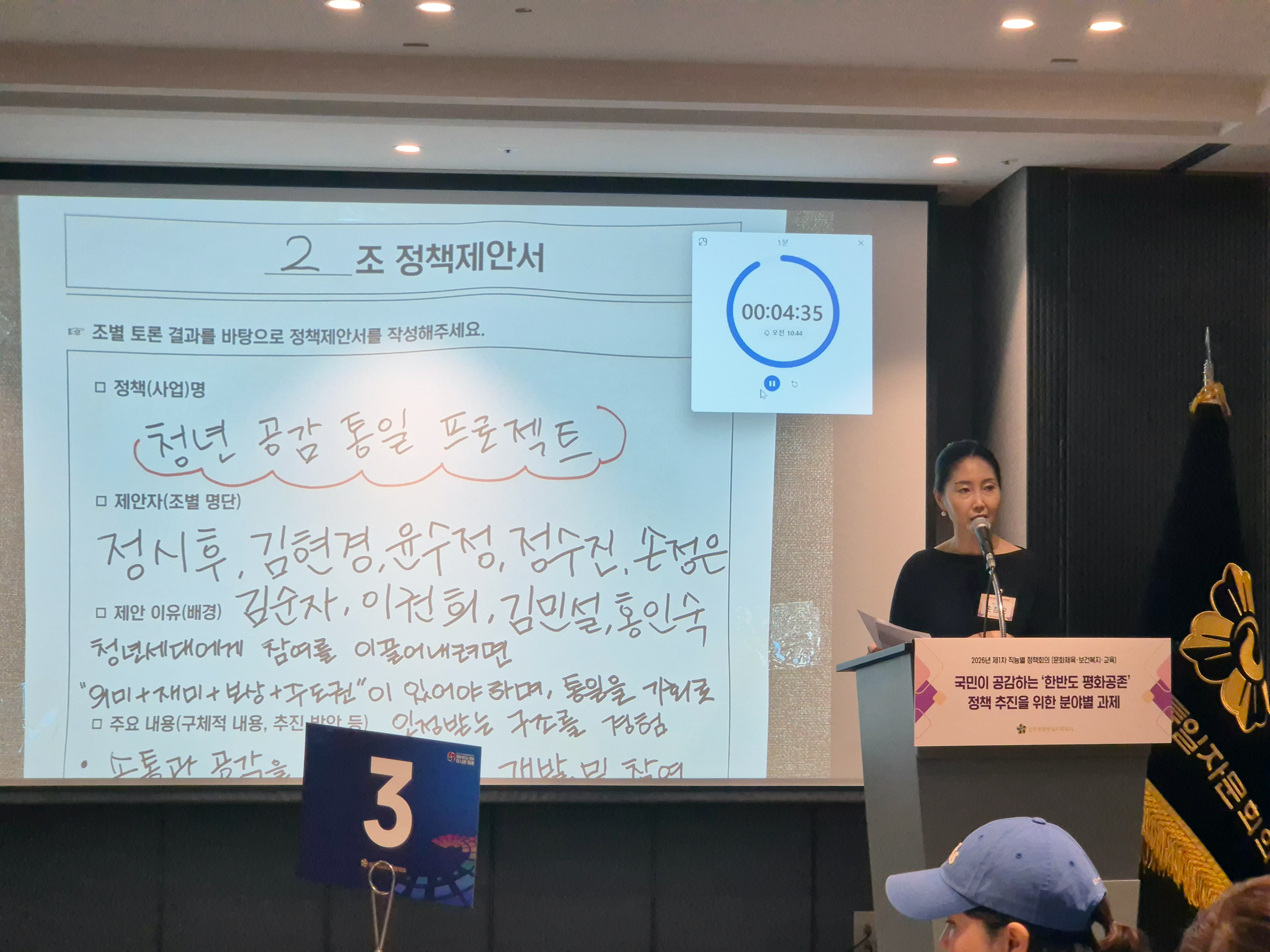
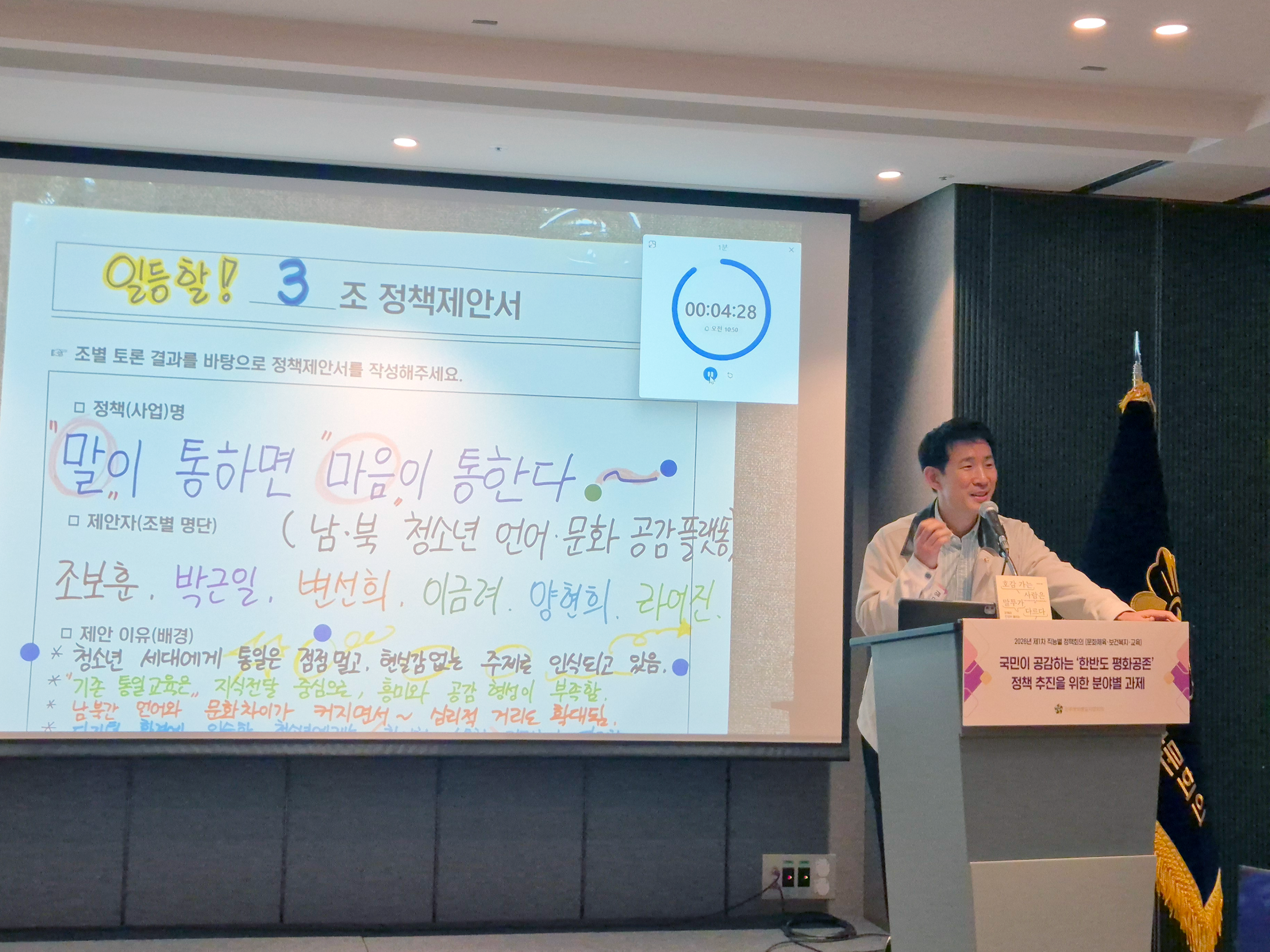
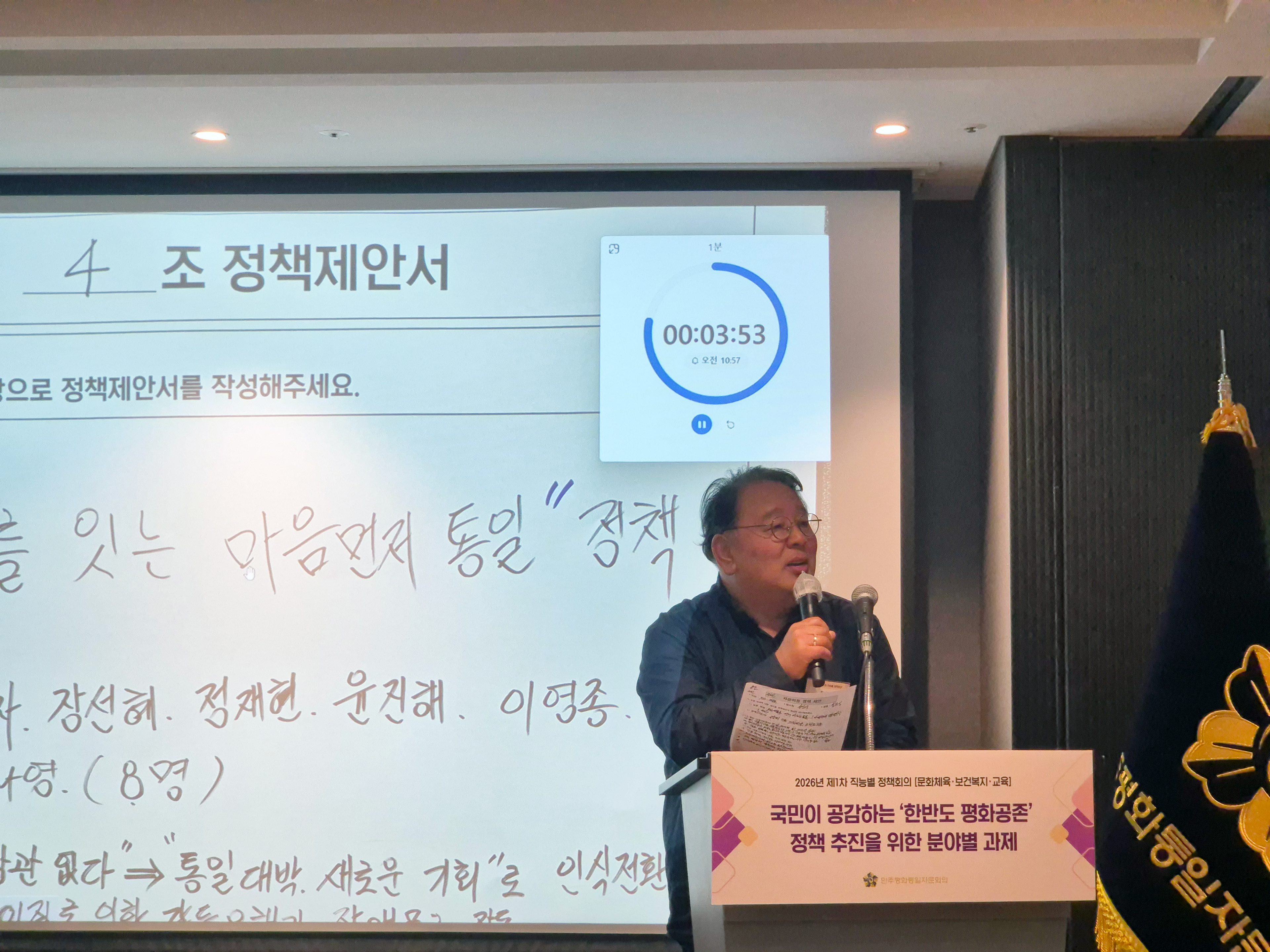
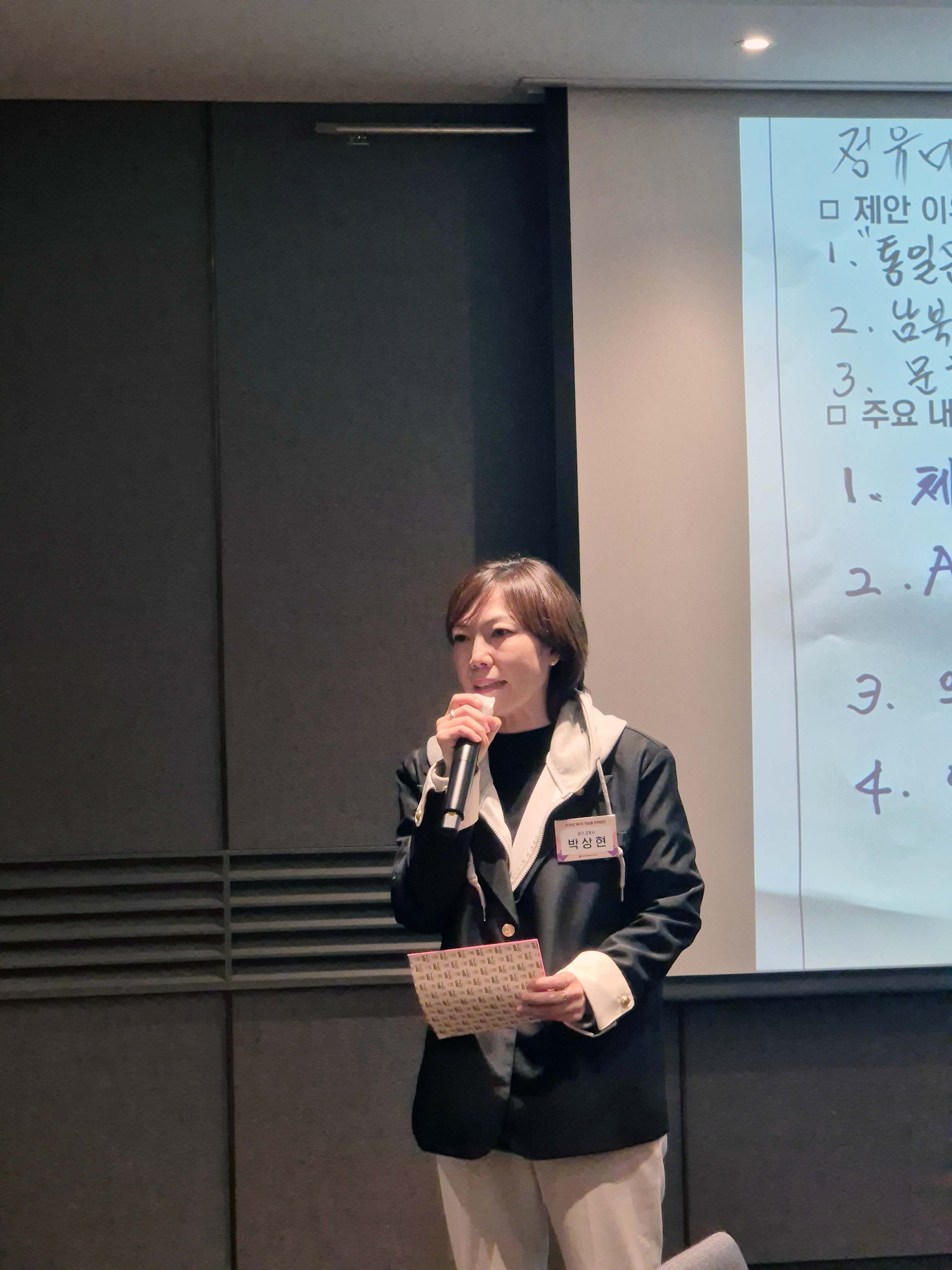
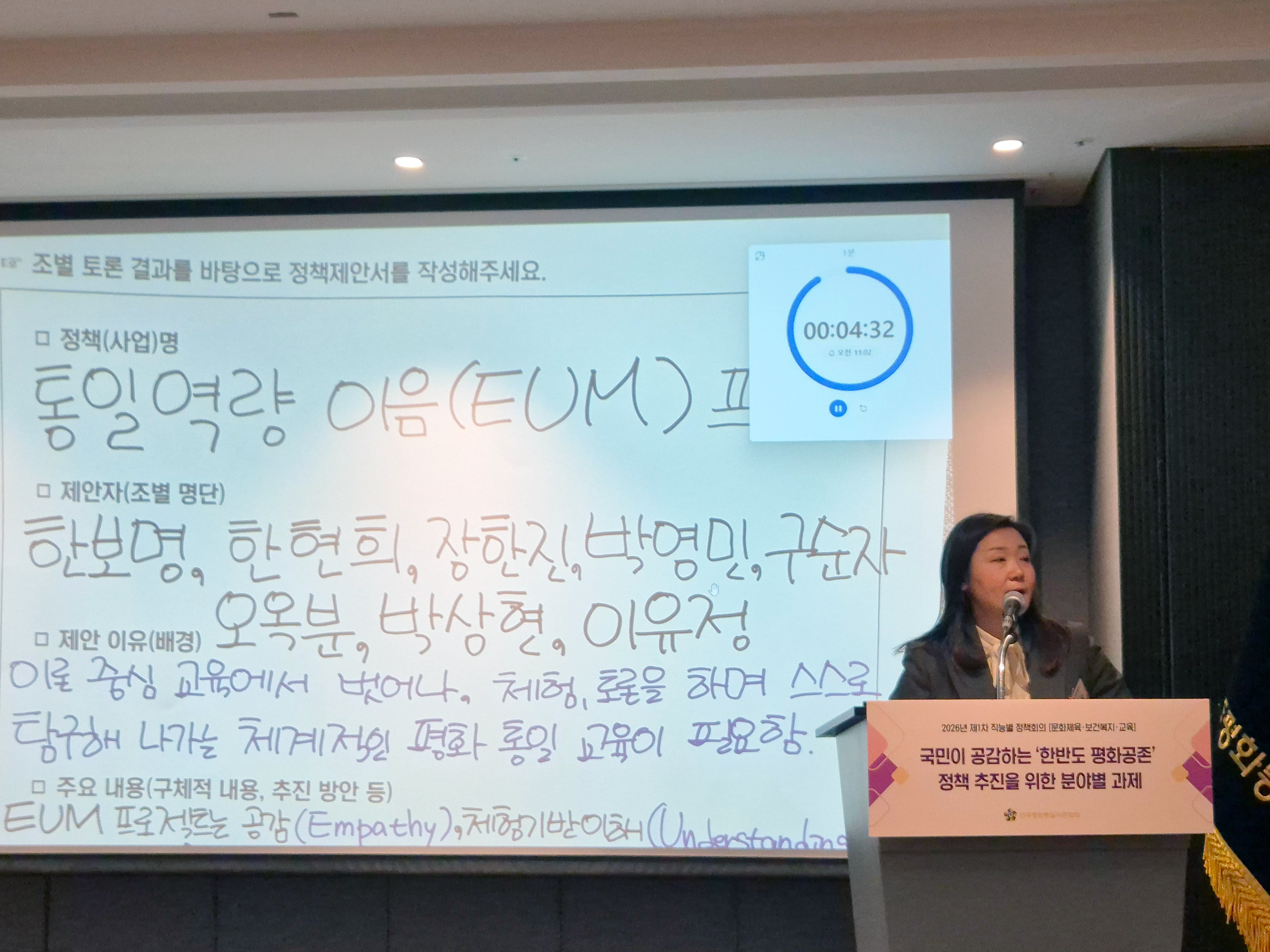
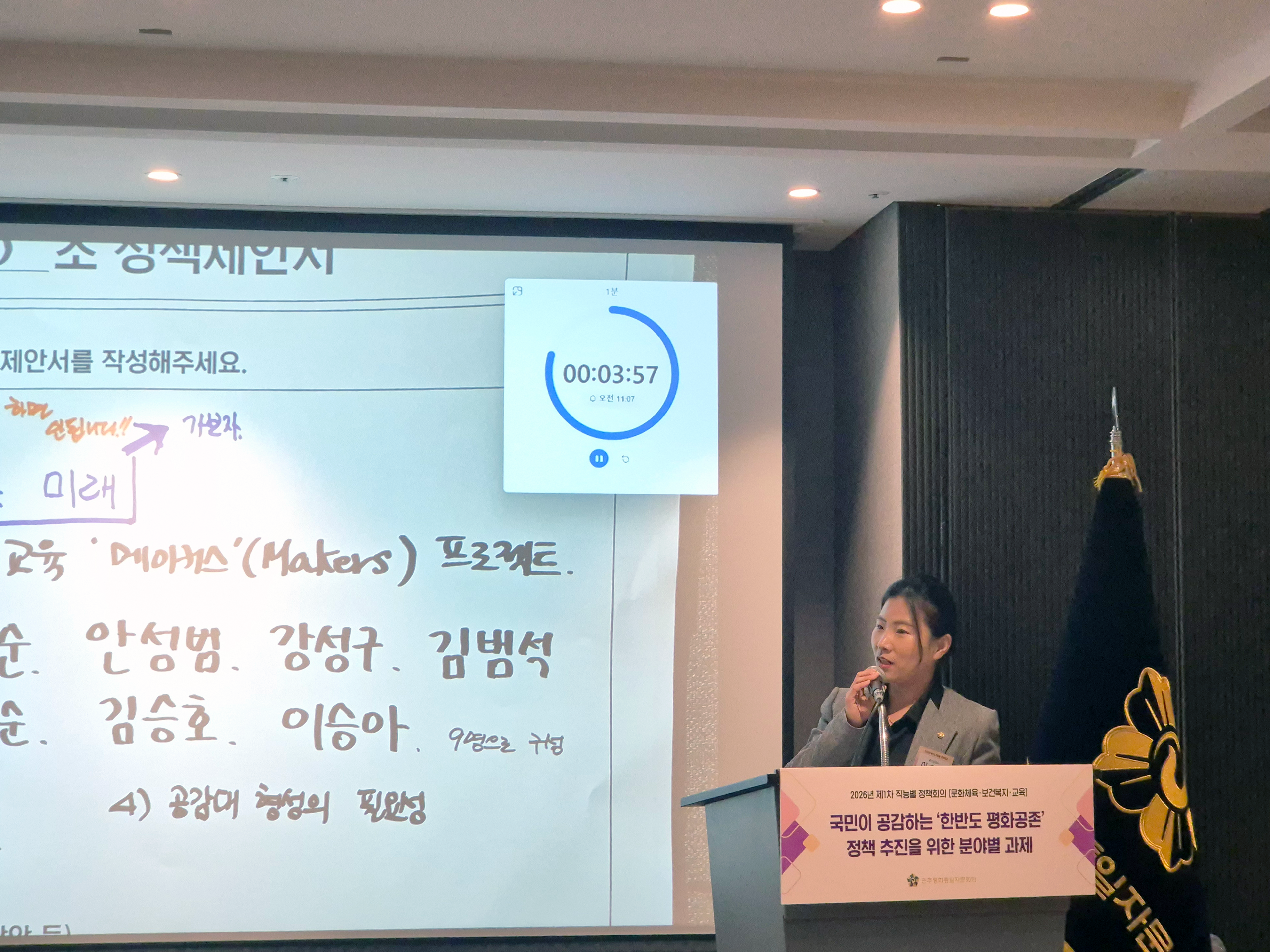
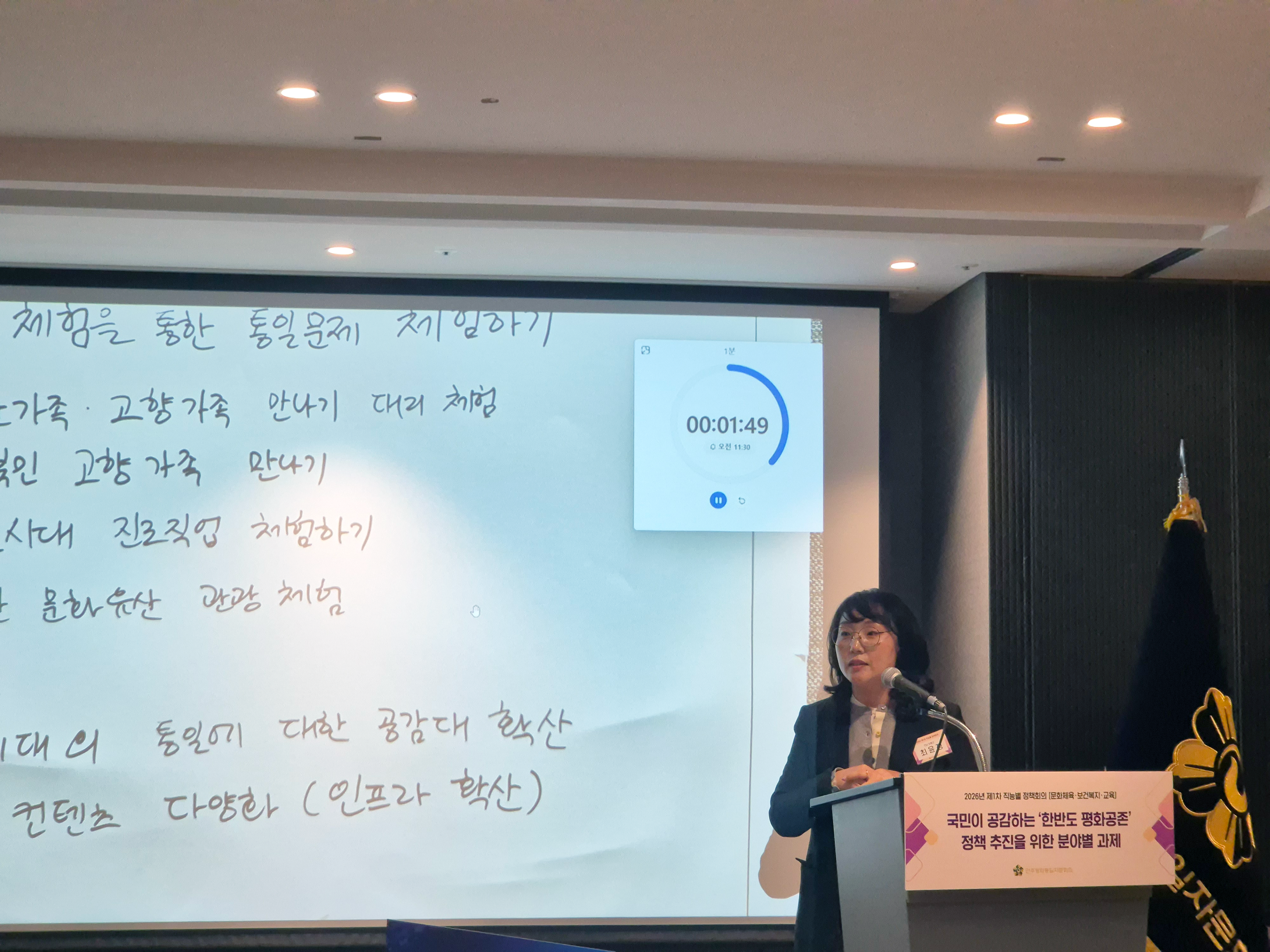
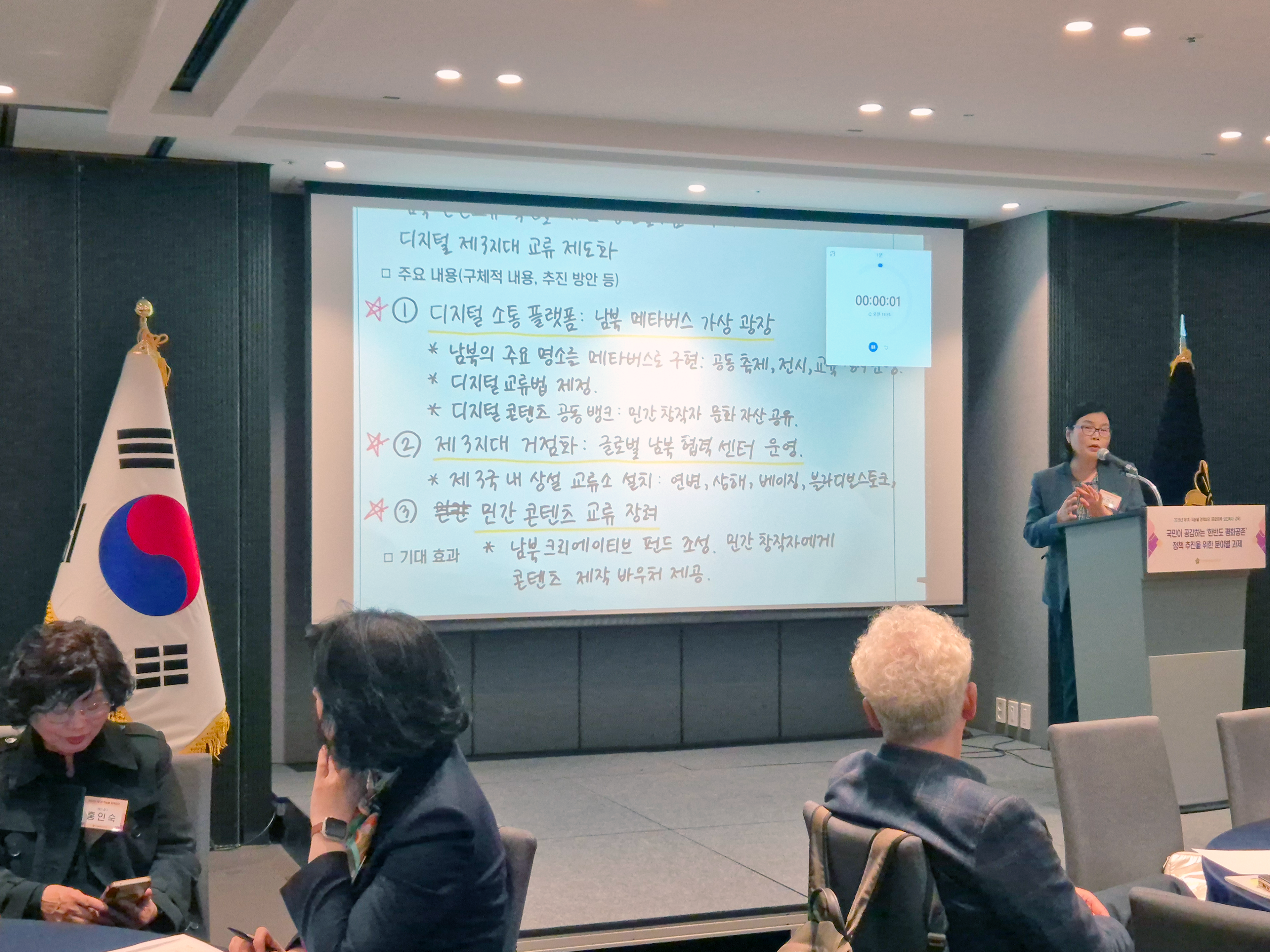
▲ Presentation of policy proposals
Second Functional Policy Meeting: Legal and Institutional Challenges for Peaceful Coexistence
The Second Functional Policy Meeting, held the following day, also featured a special lecture by Secretary General Bang Yong-seung, followed by a keynote lecture by Professor Cho Sung-ryul, Visiting Professor at Kyungnam University, titled "Policy Issues and Implementation Priorities for the Korean Peninsula Peaceful Coexistence Policy." Professor Cho traced the historical evolution of the Korean Peninsula issue and examined how the nature of inter-Korean relations, as well as the ways in which the two Koreas have defined one another, has changed over time.
The second meeting featured discussion topics including ways to transform North Korea's concept of a "hostile two-state relationship" into one of peaceful coexistence between the two Koreas; preparations needed to redefine inter-Korean relations on the basis of reconciliation and cooperation and institutionalize peaceful coexistence; and concrete measures to further strengthen cooperation with the international community. Through the keynote lecture and the group discussions that followed, participants had the opportunity to reflect in depth on both the fundamental nature of peace and practical approaches to unification.
Voices from the Meeting
Following the vote, two proposals were jointly selected as the Outstanding Policy Proposals of the Second Functional Policy Meeting: "Establishing an Inter-Korean Joint Consultative Framework to Prevent Nuclear Proliferation" (Group 1) and "Exploring Reconciliation and Cooperation Measures for Resuming Inter-Korean Dialogue" (Group 9). The first proposal called for a cooperative x-x-framework to manage the North Korean nuclear issue in a gradual and systematic manner. It recommended establishing a joint consultative body composed of working-level officials and experts from relevant agencies in both Koreas to strengthen regular communication and information sharing.
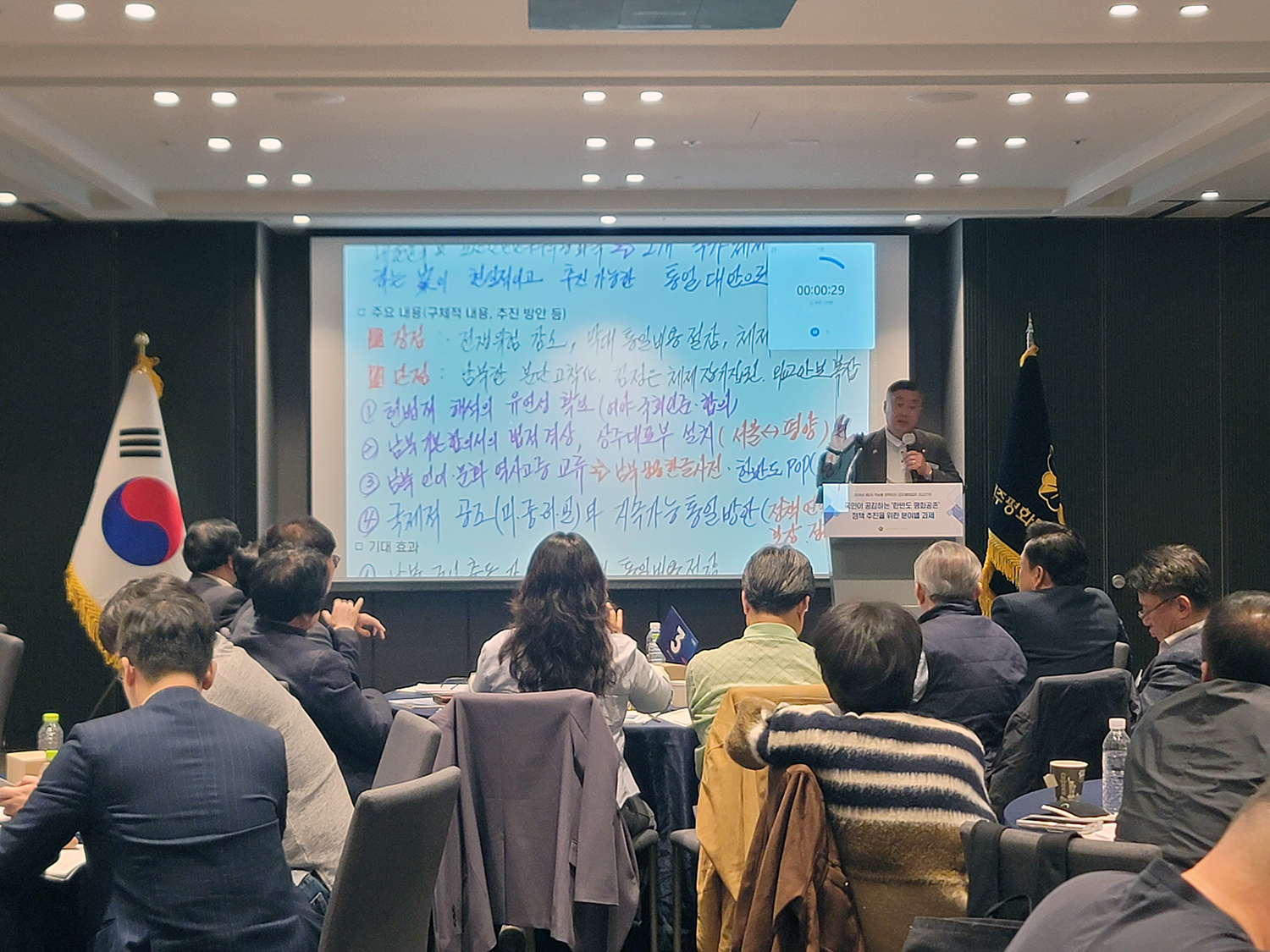
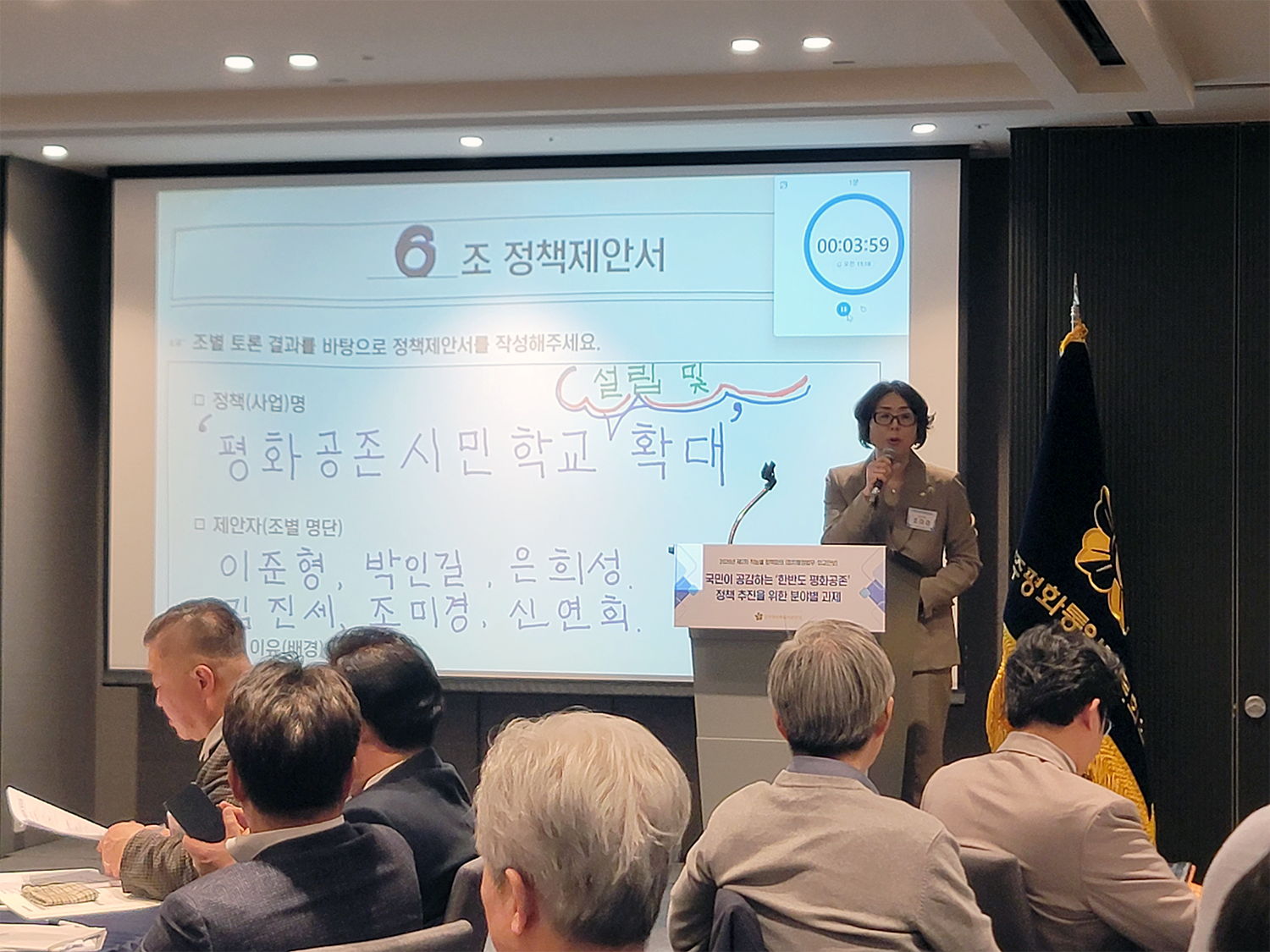
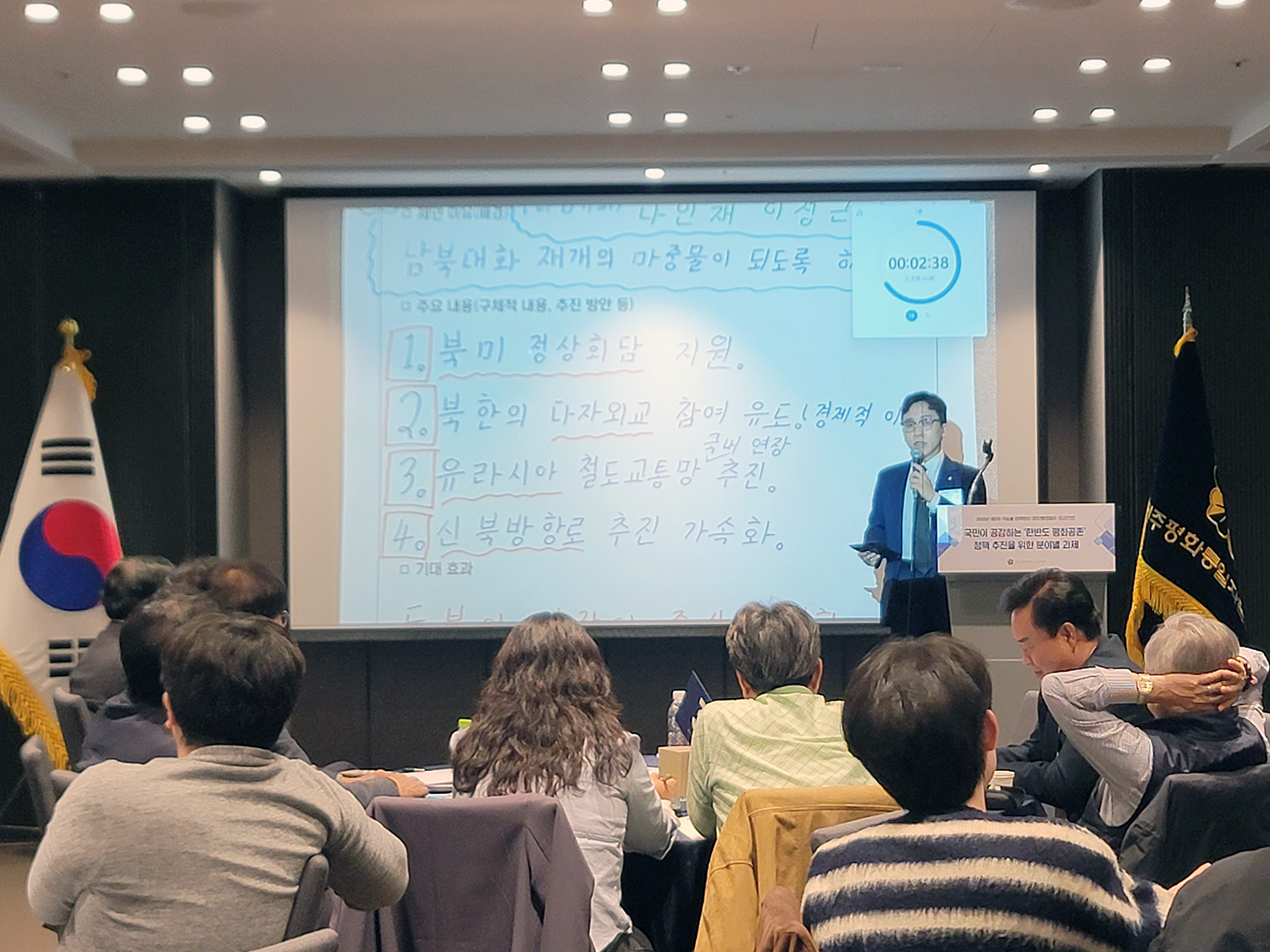
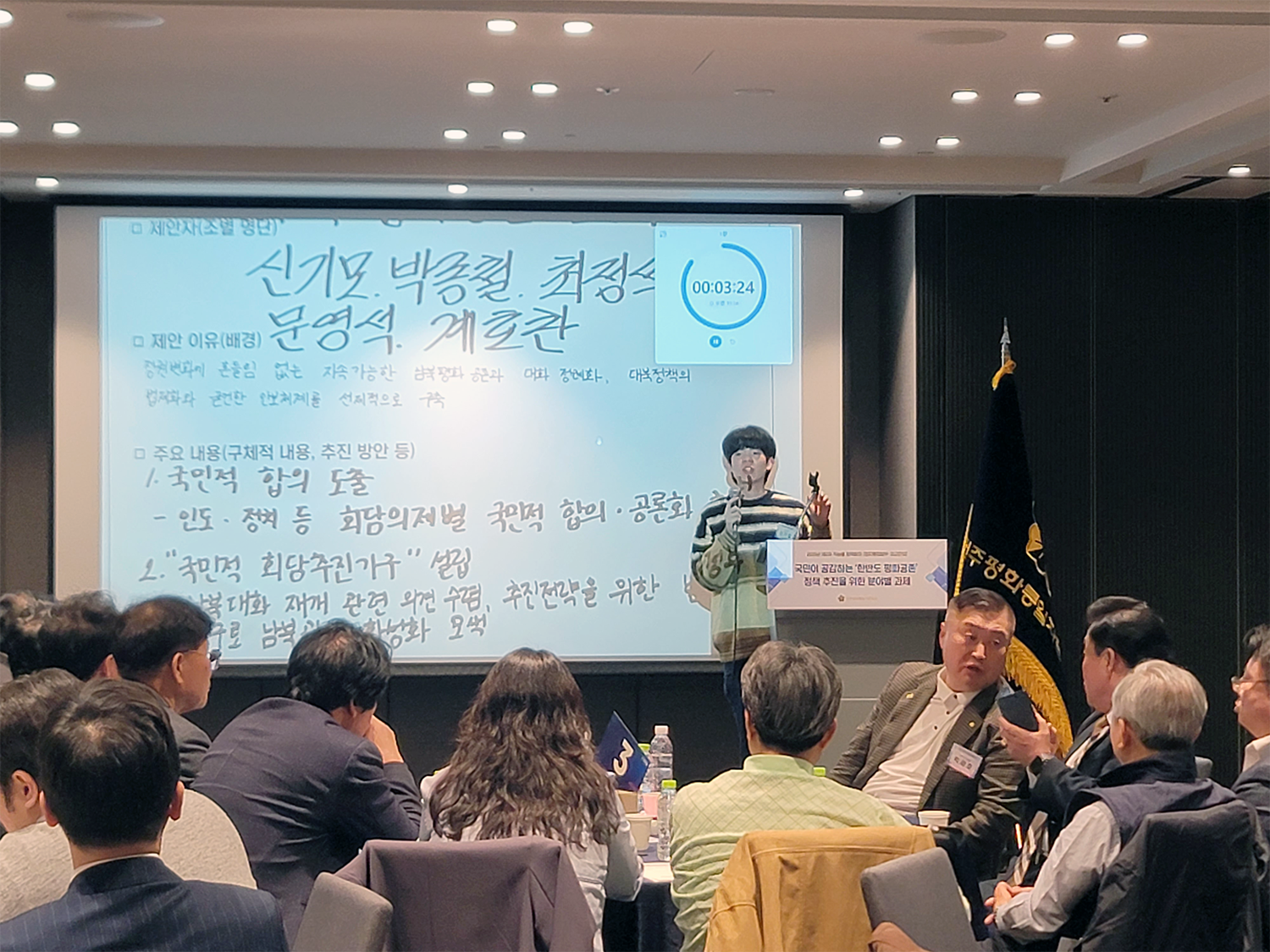
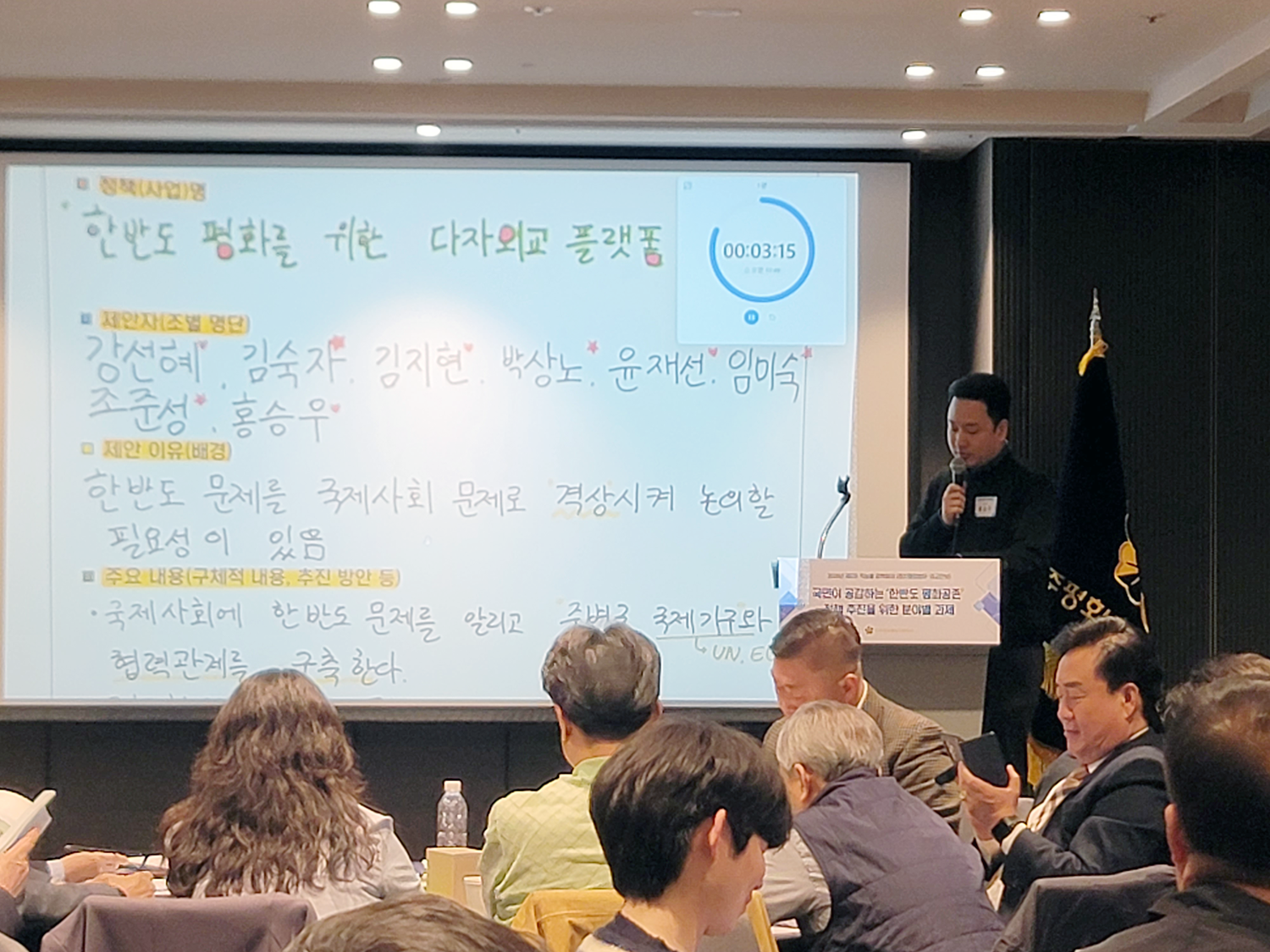
▲ Presentation of policy proposals
The proposal titled "Exploring Reconciliation and Cooperation Measures for Resuming Inter-Korean Dialogue" focused on strategies for building a sustainable x-x-framework for peaceful coexistence between the two Koreas and institutionalizing regular dialogue. Its key recommendations included ▲ establishing public deliberation processes to build national consensus on the agenda for inter-Korean talks, and ▲ creating a "National Committee for Promoting Inter-Korean Dialogue" to gather public input on the resumption of dialogue and develop implementation strategies.
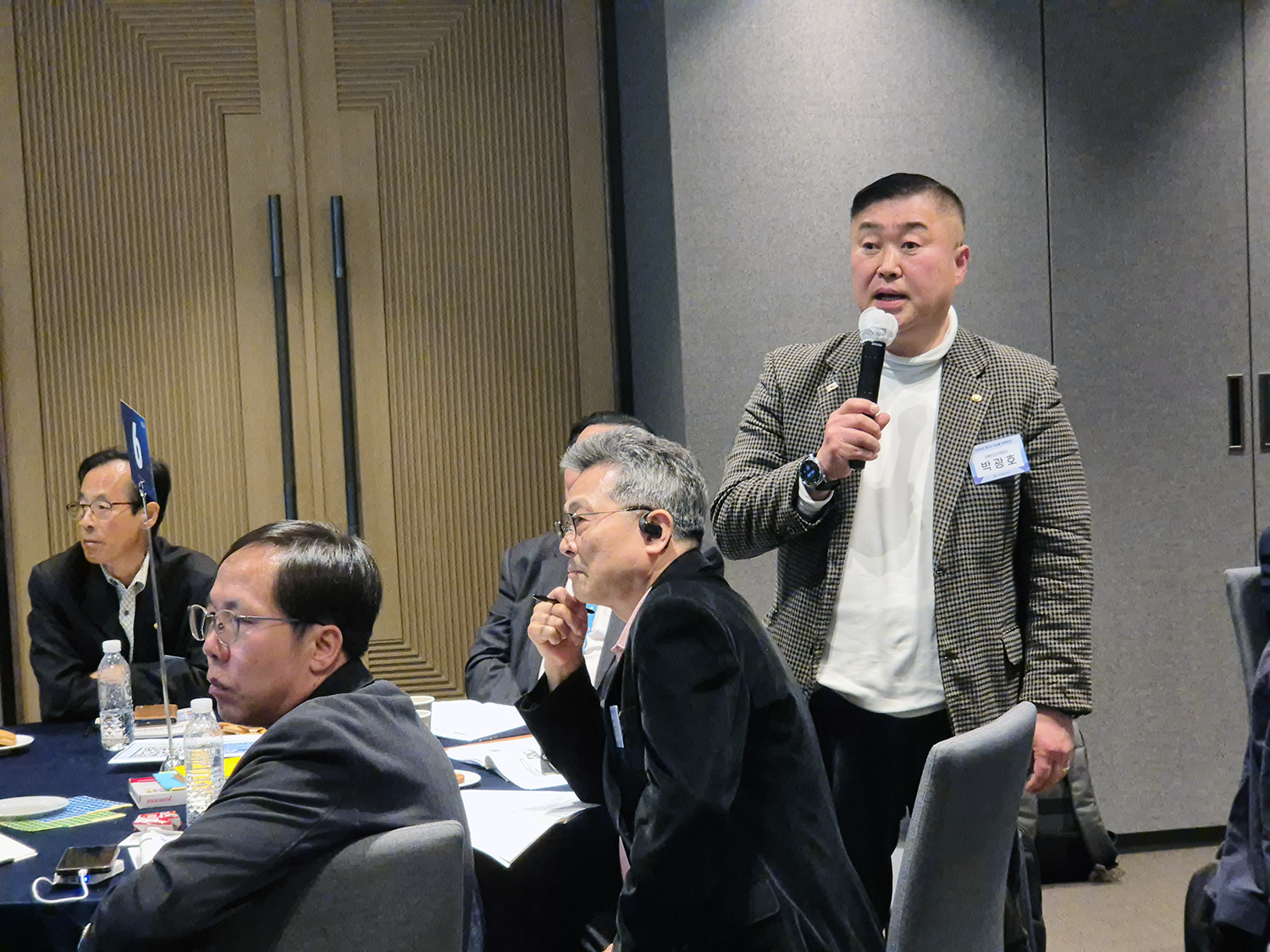
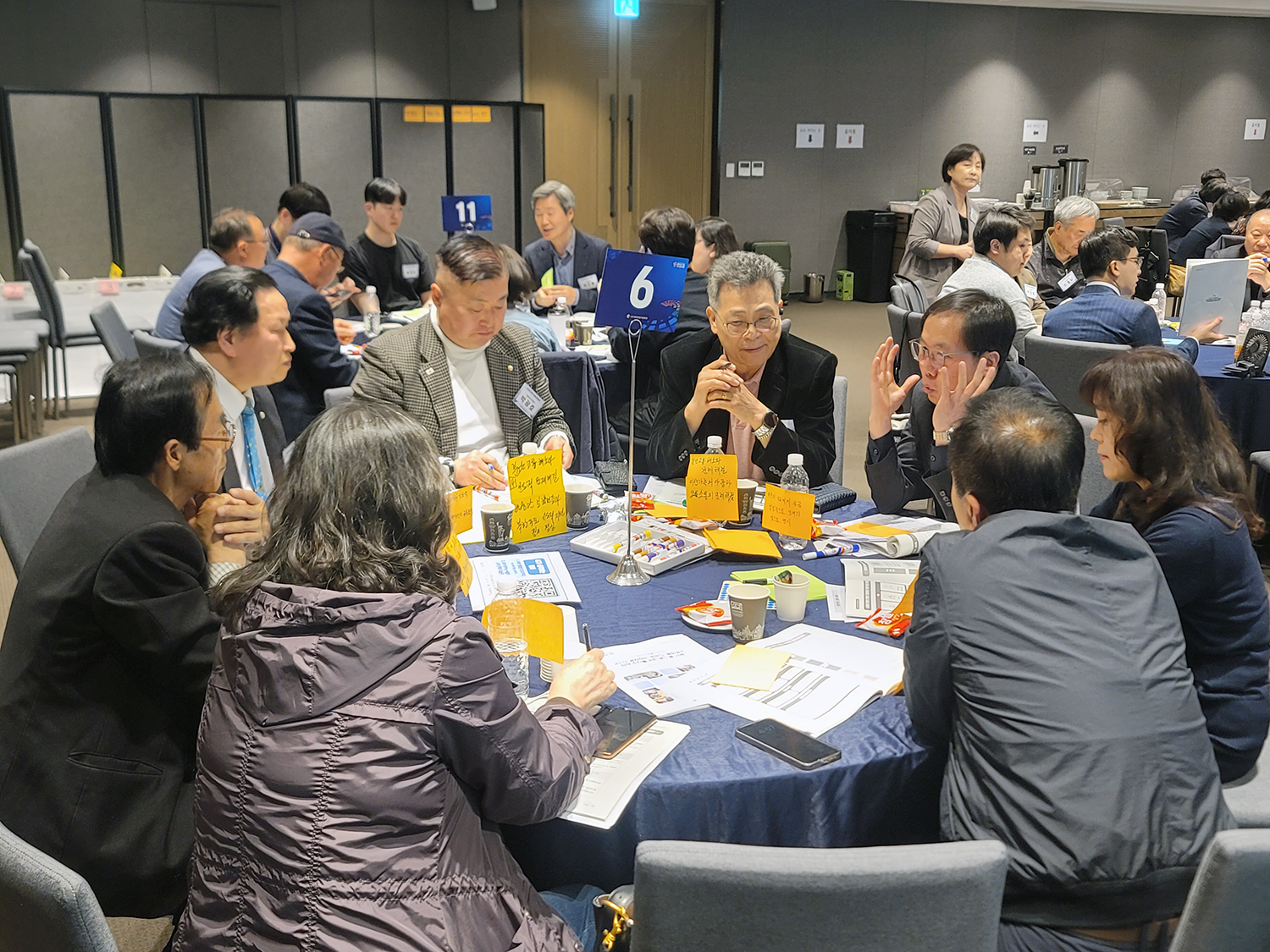
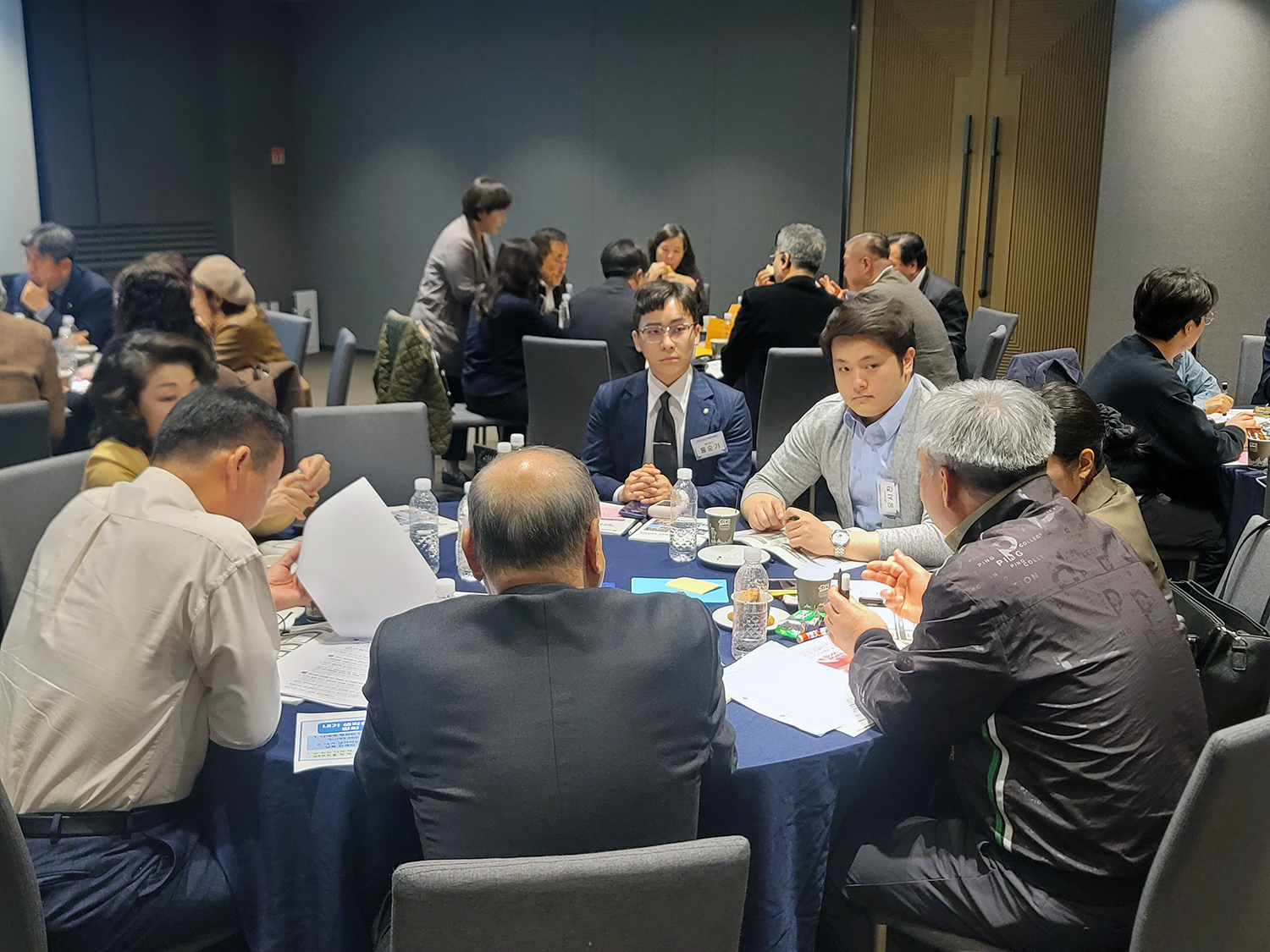
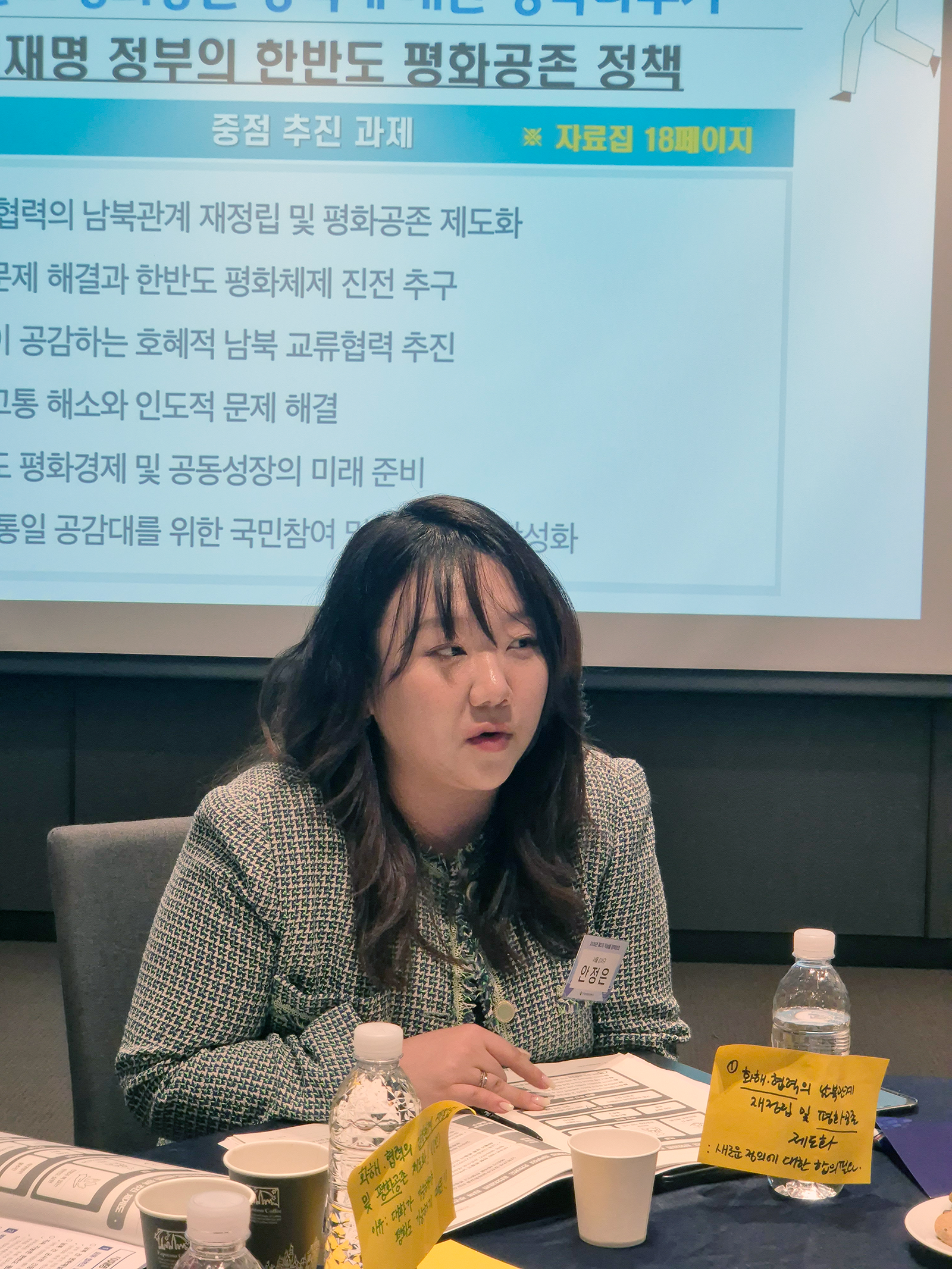
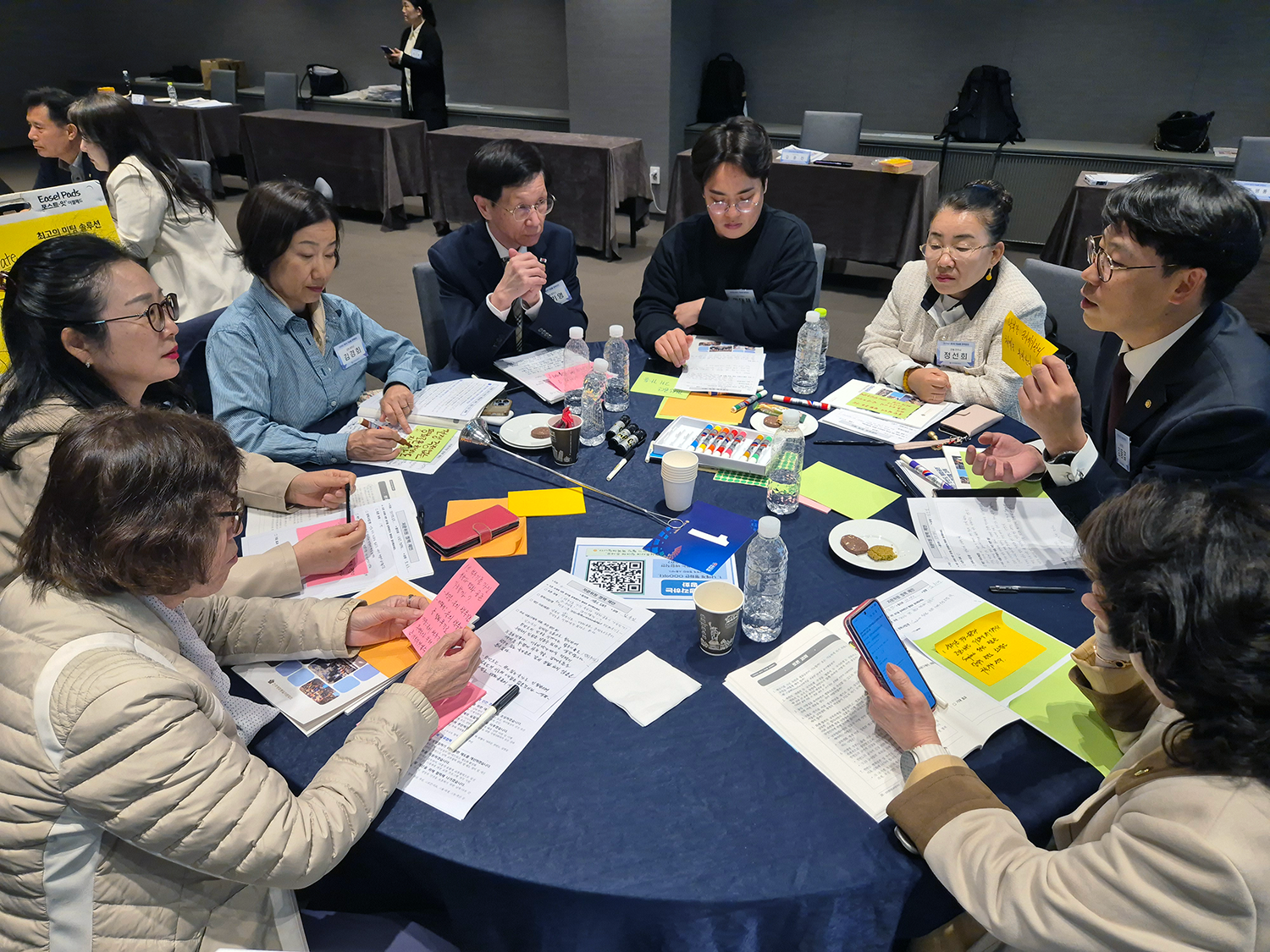
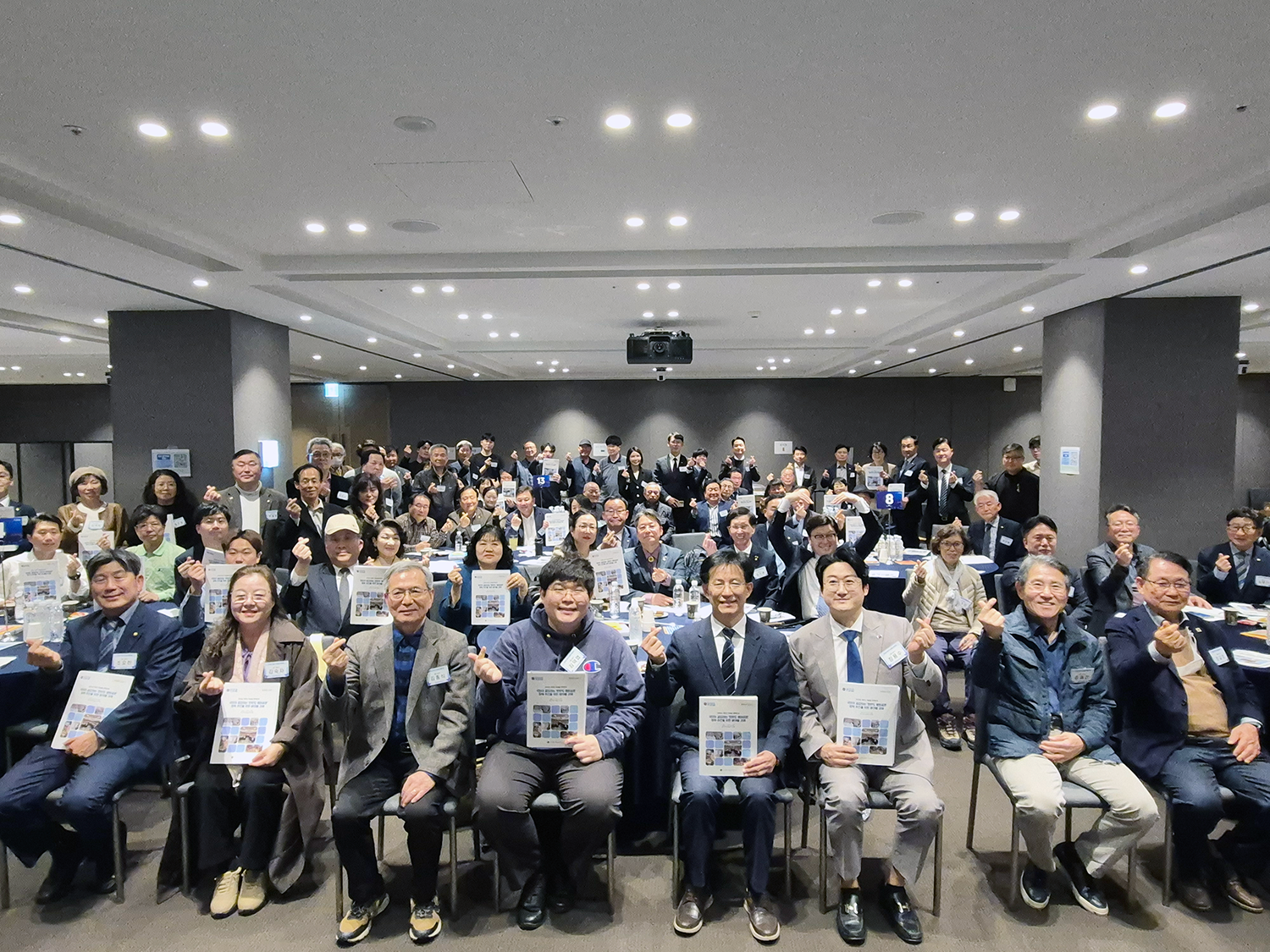
▲ Council Members participating in the Second Functional Policy Meeting
Although they were not selected as Outstanding Policy Proposals, several other ideas presented during the discussions also attracted attention.
○ Building an Educational Foundation for Peaceful Coexistence: "Peaceful Coexistence Citizens' Academy"
Participants emphasized the need to expand educational and cultural programs that foster awareness of peaceful coexistence in everyday life. Moving beyond traditional security-centered education, the proposal called for cultivating the ability to understand and embrace diverse cultural backgrounds within society as an essential competency for peace.
○ Strengthening International Cooperation from a Northeast Asian Perspective
Another proposal called for strengthening the Korean Peninsula's strategic role by linking inter-Korean cooperation with Northeast Asia's economic and logistics networks as part of a broader vision to build a "Northeast Asian Growth Engine." It also proposed encouraging more structured engagement by the international community in maintaining stability on the Korean Peninsula through initiatives such as the Eurasian railway network and development plans linking the Rason and Kaesong regions.
○ The Need to Strengthen the Legal and Institutional Framework
Participants also noted the need to strengthen the legal and institutional x-x-framework to ensure greater consistency in inter-Korean policy. In particular, they emphasized the importance of establishing appropriate procedures and institutional mechanisms for building public consensus on the resumption of inter-Korean summit meetings.
Conclusion: A Question About a Future of “Peace”
After the discussions concluded, a wall filled with sticky notes under the theme "My Thoughts on the Korean Peninsula Peaceful Coexistence Policy" reflected the diverse voices of Council Members, calling for mutual respect for differences and a shared commitment to peaceful relations.
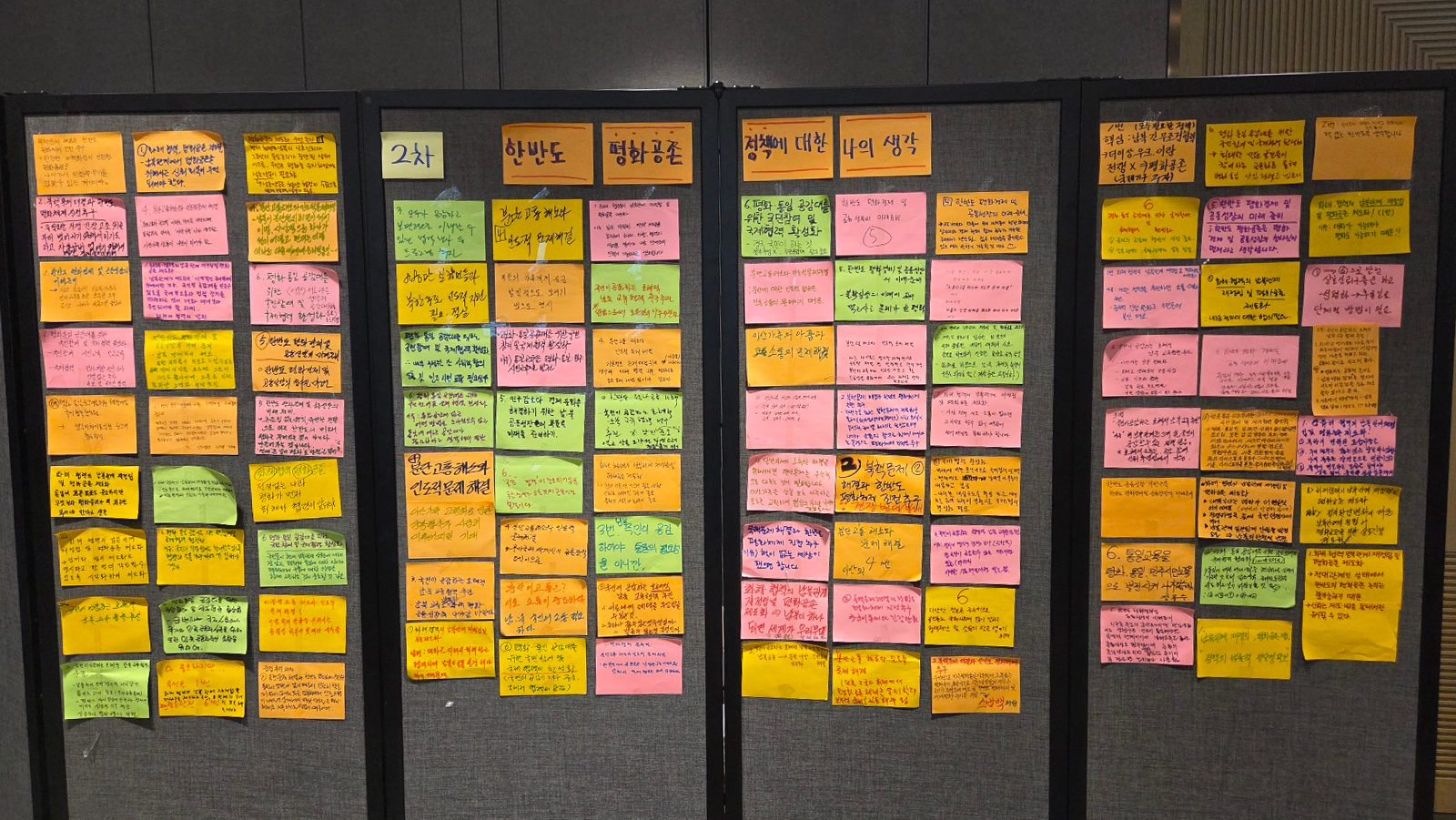
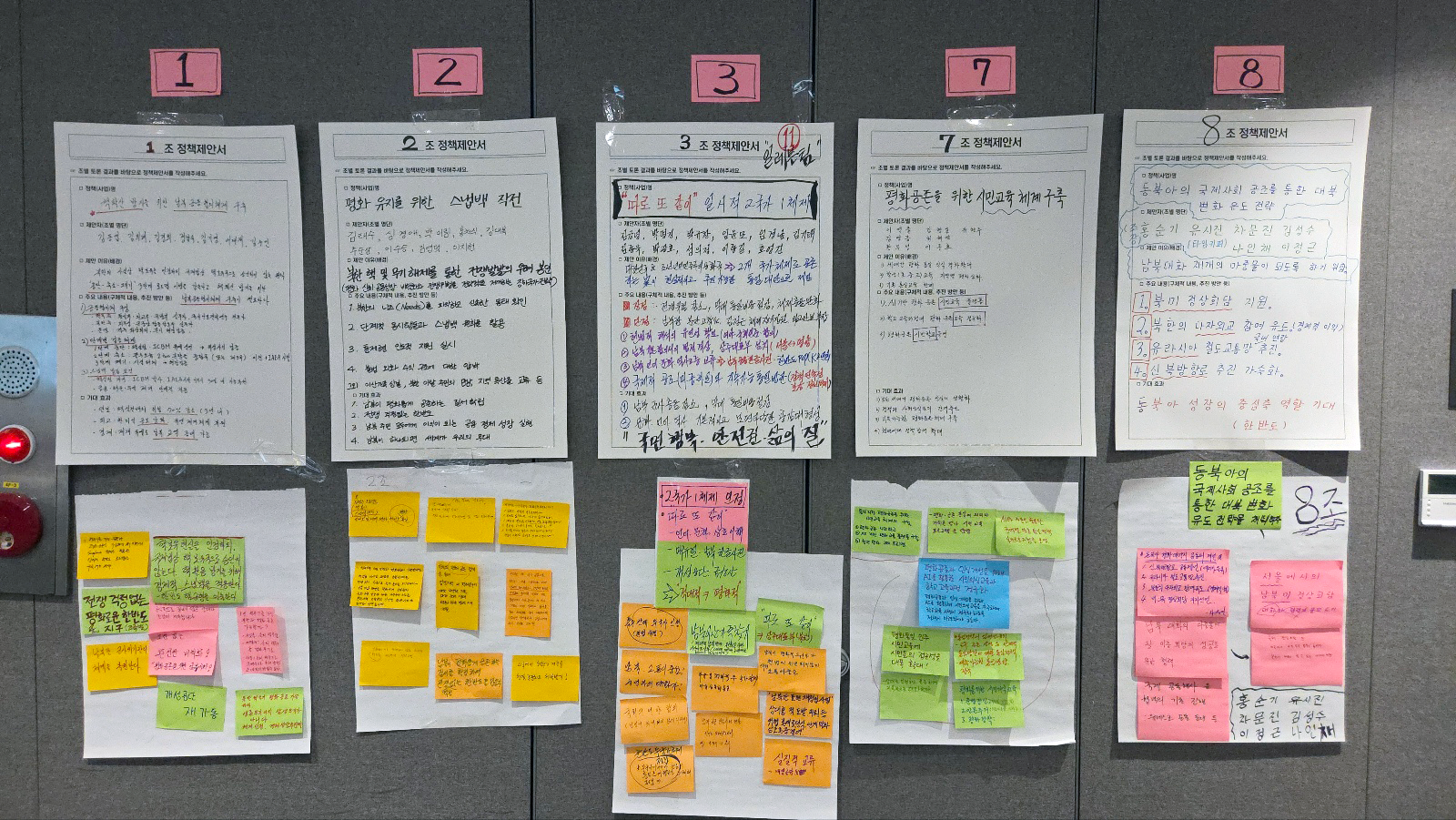
These views also echoed many of the key issues raised during the policy proposal process. Discussions addressed a wide range of topics, including the coexistence of a provisional two-state x-x-framework, peace education that extends beyond a security-centered approach, expanding civilian exchanges in the Han River Estuary, the vision of a Northeast Asian Peace Railway, and constitutional values.
Finally, one question remained at the close of the meeting:
"What kind of future do we envision for the Korean Peninsula, and what must we do to prepare for peaceful coexistence?"
The Functional Policy Meetings provided an opportunity to reflect on these questions once again.
-
How satisfied are you with the information you have reviewed?